

 en
en
 English
 русский
 Español
 عربى
عربى


What Type of PVC Pipe Is Used for Sewer Lines? SDR 35 vs Schedule 40 Guide
Industry News-Content
The Short Answer: Which PVC Pipe Goes in the Ground
A plumber opens the specifications for a residential sewer replacement and finds two approved options: SDR 35 gasketed PVC or Schedule 40 solvent-welded PVC. The homeowner, already looking at the cost of the excavation, asks which one is actually necessary. The answer affects the inspection result, the service life of the line, and the final price of the job.
For most buried gravity sewer lines serving a house, SDR 35 is the standard, cost-effective choice. SDR 26 is the stronger option for deeper trenches or heavier surface loads. Schedule 40 and DWV PVC are used where the pipe runs exposed, passes through the building, or needs extra wall thickness for impact resistance. All of these are made from unplasticized PVC, or PVC-U, the same material family that dominates building drainage systems worldwide.
The Main PVC Pipe Types Used for Sewer Lines
SDR 35: The Default Buried Sewer Pipe
SDR 35 is the pipe most contractors reach for first on a residential sewer job. It is manufactured to ASTM D3034 for sewer and drain applications in imperial markets, and the "35" is the Standard Dimension Ratio: the outside diameter divided by the wall thickness is approximately 35. A 4-inch SDR 35 pipe has a wall thickness of around 0.12 inch, which gives the ring stiffness a buried gravity line needs under normal cover conditions.
Most SDR 35 sewer pipe in the 4- to 6-inch range is commonly supplied with a gasketed bell joint, which speeds up installation and tolerates minor ground movement. Because gravity sewer pipe carries no internal pressure, the thinner wall is not a disadvantage. The combination of lower material cost and proven field performance is why SDR 35 is specified for most new residential laterals and for many municipal sewer mains up to 15 inches.
SDR 26: The Thicker Wall for Harder Conditions
When the bury depth increases beyond roughly 4 meters (about 13 feet), or the line runs under a driveway, parking bay or road, the specification often moves to SDR 26. A lower SDR number means a thicker wall, and the higher pipe stiffness gives the pipe more resistance to crushing and deflection. The trade-offs are a higher price per meter and a slightly smaller internal bore for the same outside diameter.
Schedule 40: The Heavy-Duty Option
Schedule 40 PVC has the thickest wall of the common sewer pipe types, about 0.237 inch for a 4-inch pipe. The same dimensions are used by the pressure-rated version under ASTM D1785, while the drain-waste-vent version under ASTM D2665 shares the wall thickness but is not pressure-rated. In sewer work, Schedule 40 appears where the pipe is exposed to potential impact, near the surface, or in a short run above grade before the line drops into the trench.
DWV PVC: Drainage and Venting Inside the Building
DWV stands for Drain, Waste and Vent. DWV PVC is a non-pressure pipe used for vertical stacks, branch drains and vent risers inside the building. It is often confused with Schedule 40 because the outside diameter and wall thickness are the same. The difference is the classification: DWV is tested for drainage flow and atmospheric venting, not for internal pressure. Sewer lines that run through a basement or crawl space are frequently DWV-rated.
PVC-U: The Material Behind the Label
Unplasticized PVC, or PVC-U, is the rigid polymer from which all of these pipes are made. "Unplasticized" means no softening plasticizers are added, which gives PVC-U its stiffness, chemical resistance and long service life in contact with soil and sewage. The same PVC-U material family is also the basis of the metric drainage pipe used widely in export markets, with sizes such as DN50, DN75, DN110 and DN160 corresponding closely to 2, 3, 4 and 6 inches. The differences between PVC-U, CPVC and PVCO are explained in more depth in our guide to PVC pipe types.
How the Sewer Pipe Types Compare
| Pipe type | Wall thickness | Pressure rating | Typical joint | Main use |
|---|---|---|---|---|
| SDR 35 | approx. 0.12 in | Non-pressure | Gasket bell | Buried gravity sewer, residential laterals |
| SDR 26 | approx. 0.16 in | Non-pressure | Gasket bell | Deep burial, heavy surface loads |
| Schedule 40 | approx. 0.24 in | Pressure-rated per D1785; DWV version non-pressure | Solvent weld | Exposed runs and shallow transitions |
| DWV | approx. 0.24 in | Non-pressure | Solvent weld | Above-grade drainage and venting |
| PVC-U (metric) | Varies by standard | Non-pressure | Solvent weld or gasket | Building drainage, export sewer systems |
What the SDR Rating Actually Means
Wall Thickness and Pipe Stiffness
When a pipe is marked SDR 35, the number is the ratio between the outside diameter and the minimum wall thickness. A lower SDR means a thicker wall. In sewer work, SDR matters more than pressure rating, because a buried pipe fails under external loads: soil weight, backfill compaction and surface traffic, not internal pressure. The minimum pipe stiffness of a 4-inch SDR 35 pipe is about 46 psi; the SDR 26 version is more than twice that. Engineers use the SDR value to confirm that the pipe can handle the planned cover depth and traffic class.
Gasketed Joints vs. Solvent Welds
The joint is where most field failures start. Gasketed SDR pipe allows slight flexing at the bell, which helps the line survive minor ground settlement. Solvent-welded joints on Schedule 40 and DWV systems are rigid and must be properly cleaned, primed and pressed home to form a full bond. Both systems work well, but they should not be mixed in the same underground run without an approved transition fitting.
How Site Conditions Change the Specification
Burial Depth and Surface Loads
If the sewer line sits under a driveway, a road or a parking bay, the pipe must carry repeated vehicle loads on top of the soil weight. A shallow trench under a driveway may force an upgrade from SDR 35 to SDR 26 or Schedule 40. The practical rule: deeper cover means more soil weight, while shallower cover means a larger share of the vehicle load reaches the pipe. When in doubt, an engineer should calculate the required pipe stiffness from the actual depth and traffic class.
Soil Type and Groundwater
Sharp rock in the trench can dent or punch through a thin-walled pipe if the bedding is not prepared correctly. Sand and gravel bedding is forgiving; rock spoil is not, regardless of pipe type. High groundwater also favors gasketed joints, because the joint can accommodate small pipe movements without cracking and leaking.
Local Codes and Standards
Every jurisdiction controls which pipe is allowed in the ground. In the United States, most codes adopt the International Plumbing Code (IPC) or the Uniform Plumbing Code (UPC), and accept ASTM D3034 for buried sewer and ASTM D2665 for DWV. In many export markets, a PVC-U drainage pipe certified to a national standard such as GB/T 5836.1 or the relevant ISO series is the norm. A pipe manufactured to the wrong standard for the destination will fail inspection no matter how good its quality is. For a broader view of how PVC compares with HDPE and PPR in drainage applications, the plastic drainage buyer's guide is a practical next step.
Fittings Determine the Leak Risk
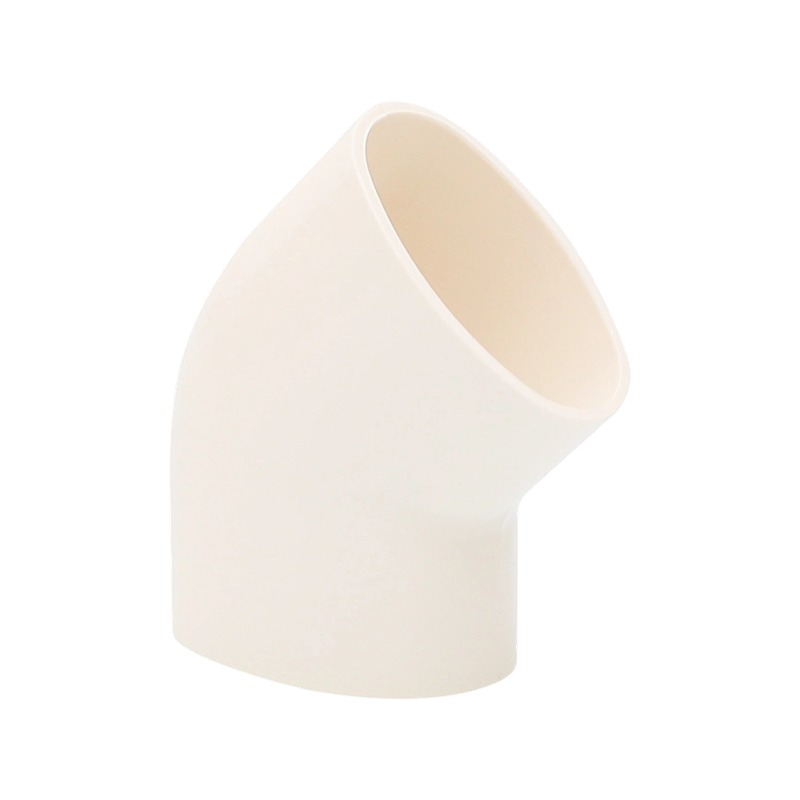
The pipe is only half of a sewer system. Every direction change, branch connection and cleanout is a potential leak point. A typical sewer lateral uses a Y-branch tee where the lateral joins the main, a 90-degree elbow where the vertical stack turns horizontal, and a cleanout at the base of the stack for rodding access. Each fitting must match the same standard and the same socket geometry as the pipe.
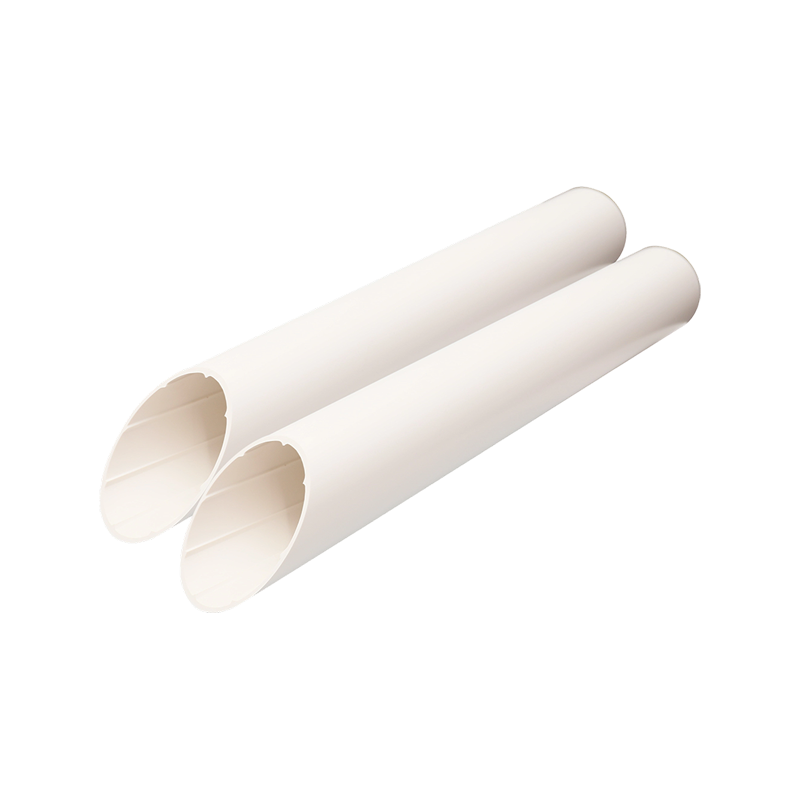
On the pipe side, a standard PVC-U drainage pipe in DN50 to DN160 sizes covers the core of a gravity system with solvent-weld sockets consistent across the range. In multi-storey buildings, where the noise of falling wastewater travels down the shaft, a spiral PVC drainage pipe reduces flow noise by breaking the water film along the pipe wall. And where the stack meets the horizontal run, a 90-degree PVC elbow with cleanout keeps the inspection point exactly where a plumber would look for it.
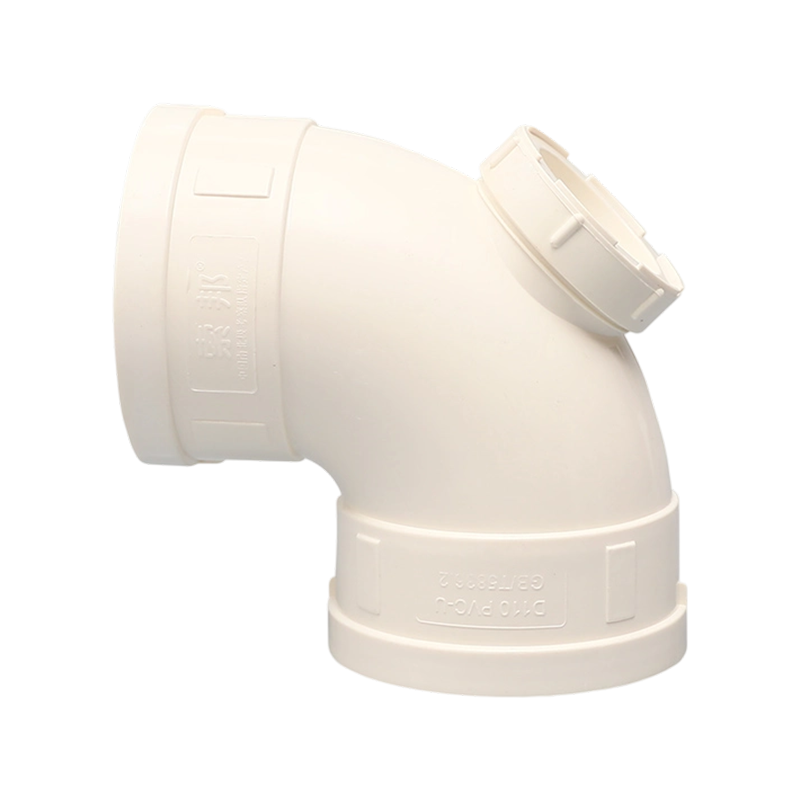 90°PVC Elbow with Cleanout Suppliers, Wholesale Company - Shanghai Pilsa Pipe InPilsa Pipe is 90°PVC Elbow with Cleanout Suppliers and Company in China, Wholesale 90°PVC Elbow with Cleanout online, The 90°PVC Elbow wi...View Product →
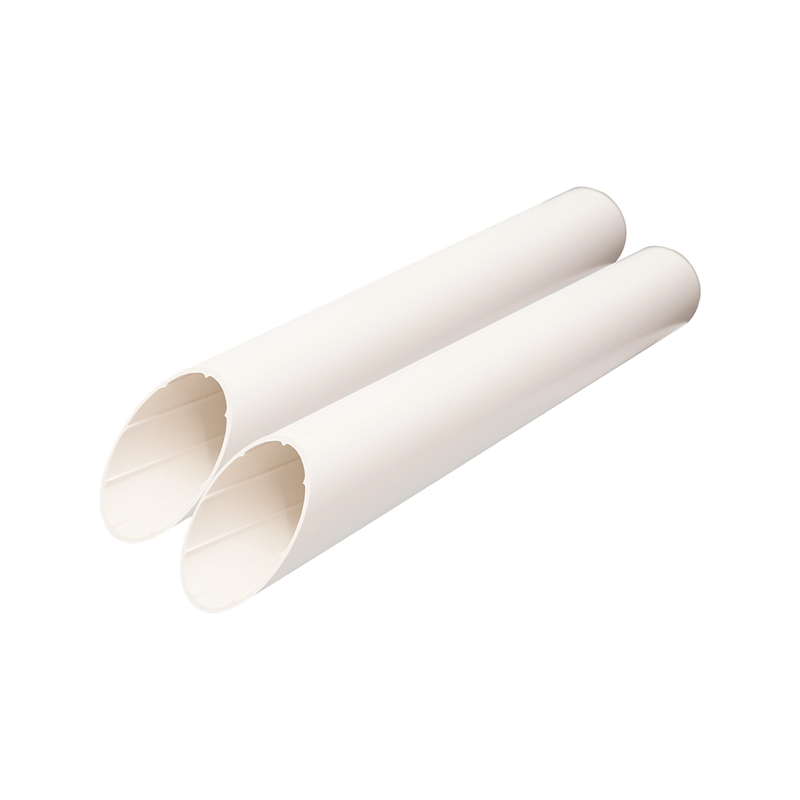 PVC Drainage Spiral Pipe Suppliers, Wholesale Company - Shanghai Pilsa Pipe InduPilsa Pipe is PVC Drainage Spiral Pipe Suppliers and Company in China, Wholesale PVC Drainage Spiral Pipe online, PVC Drainage Spiral Pip...View Product →
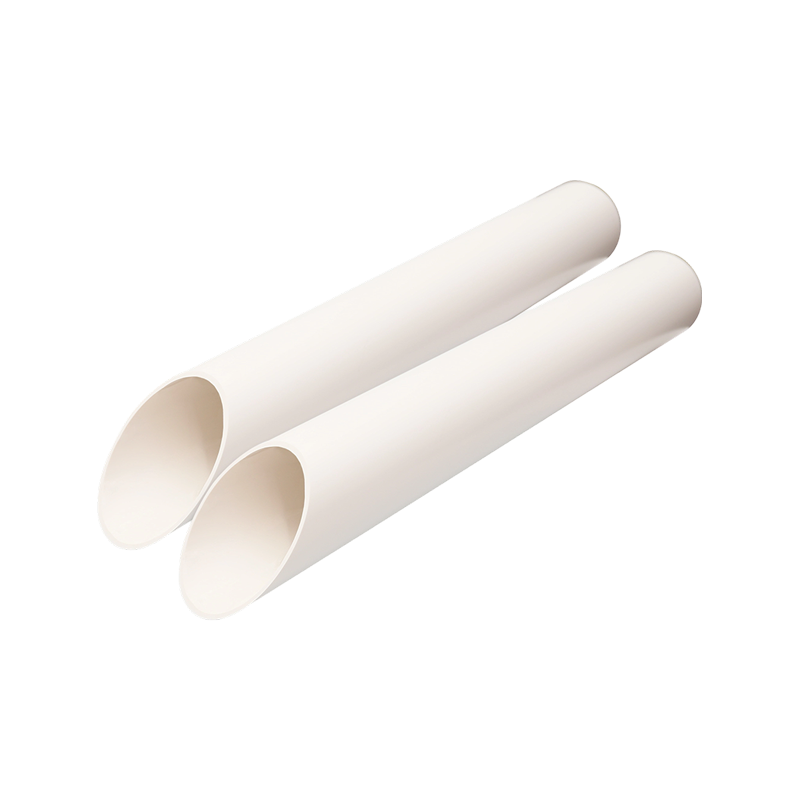 PVC Standard Drain-Pipe Suppliers, Wholesale Company - Shanghai Pilsa Pipe IndusPilsa Pipe is PVC Standard Drain-Pipe Suppliers and Company in China, Wholesale PVC Standard Drain-Pipe online, PVC Standard Drain-Pipe i...View Product →
Buyers comparing suppliers should ask how the pipe is marked, how the wall thickness is verified, and whether the socket dimensions are controlled in-house. When pipes and fittings come from the same production line, the assembled system behaves predictably under water-tightness testing and in service.
What Buyers Should Check Before Ordering Sewer PVC
For contractors, distributors and importers, price per meter is only the entry point. Field failures and rejected shipments usually come from details that are easy to verify before placing an order:
- Standard compliance: the pipe must be produced to the standard the destination code requires, such as ASTM D3034, ASTM D2665, GB/T 5836.1 or the relevant national equivalent.
- Wall thickness and outside diameter tolerance: request the actual measurement report; a wall near the minimum tolerance still passes the standard but leaves less safety margin in the trench.
- Jointing system: confirm whether the sockets are belled for gaskets or designed for solvent cement, and order the matching fittings and adhesive.
- Socket geometry: socket depth and diameter tolerances matter more than the pipe body, because the socket is where leaks start.
- Certification and batch inspection: CE marking and ISO quality management certification show that the production process is audited, but they do not replace checking a batch sample before shipment.
As a PVC-U pipe and fitting manufacturer, Suban produces a full drainage matrix that includes standard drainage pipe, spiral and double-layer pipes, elbows, tees, traps, floor drains, expansion joints and cleanout fittings. This is the system view that keeps a sewer line watertight over the long term. Readers comparing different plastic materials can also start with our comparison of six common plastic pipe types.
The Final Recommendation
Use SDR 35 for the standard buried sewer run, step up to SDR 26 or Schedule 40 when depth, traffic or surface exposure demands it, and use DWV-rated pipe inside the building. Match every fitting to the same standard, prepare the bedding properly, and keep the joints clean and correctly assembled. A properly selected PVC-U sewer line is expected to serve for decades under normal conditions.
Our Product //
Recommend Products


 +86-13801995968
 +86-18017886575
 No. 366, Lane 6995, Puxing Road, Fengxian District, Shanghai
Copyright © SHANGHAI PILSA PIPE INDUSTRY CO., LTD. All rights reserved.

