

 en
en
 English
 русский
 Español
 عربى
عربى


PVC Pipe Types: A Complete Guide to PVC-U, CPVC, PVC-O, Schedule 40 & 80
Industry News-Content
- 1 What Is PVC Pipe? A Quick Overview
- 2 The 5 Main Types of PVC Pipes by Chemical Composition
- 3 Schedule 40 vs Schedule 80 PVC Pipe: Wall Thickness, Pressure & Cost
- 4 PVC Pipe Connection Methods: Which One Fits Your Project?
- 5 PVC Pipe Applications: Where Each Type Excels
- 6 How to Choose the Right PVC Pipe: A Decision Matrix
- 7 International Standards for PVC Pipes (ASTM, ISO, BS, JIS)
What Is PVC Pipe? A Quick Overview
Global PVC pipe consumption topped 45 million metric tons in 2024. This polymer, born in a German lab in 1872, now carries water, protects electrical wiring, and forms the backbone of modern drainage systems. Unlike metal alternatives, PVC resists corrosion, weighs a fraction of steel, and installs in a fraction of the time.
Polyvinyl chloride pipes start with a base resin that, by itself, is rigid and brittle. Manufacturers blend in stabilizers, lubricants, and impact modifiers to create a material that handles decades of service. The key variable is what gets added—or deliberately left out. That choice determines the pipe’s final performance class.
Standard PVC pipe—often called PVC-U—contains no plasticizers, which keeps it stiff and strong for cold-water pressure lines. When you need hot-water tolerance, chlorinated PVC (CPVC) steps in. By adding extra chlorine atoms to the polymer chain, CPVC gains a temperature ceiling roughly 40°F higher than standard PVC. For high-impact or high-pressure jobs, two other variants dominate: oriented PVC (PVC-O) and high-impact PVC (PVC-Hi). Understanding these four chemical families is the first step toward picking the right pipe.
The 5 Main Types of PVC Pipes by Chemical Composition
Industry literature often splits PVC pipe into four primary categories, but a fifth—modified PVC (PVC-M)—deserves a mention for its incremental improvements. The following table lays out the core differences in composition, temperature range, pressure capacity, and typical use.
| Type | Composition | Temp. Range (°F) | Max Pressure (psi) | Common Applications |
|---|---|---|---|---|
| PVC-U | Unplasticised PVC, no plasticizers | 32–140 | 100–315 | Cold water supply, DWV, electrical conduit |
| CPVC (PVC-C) | Chlorinated PVC, higher chlorine content | 33–200 | 100–400 | Hot & cold water, industrial chemicals |
| PVC-O | Molecularly oriented PVC, bi-axially stretched | -5–140 | 200–500 | High-pressure irrigation, water mains |
| PVC-Hi | Impact-modified with rubber or elastomers | 5–140 | 80–250 | Underground conduit, mining, sewer |
| PVC-M | Modified PVC with improved ductility | 14–140 | 150–300 | Gas distribution (outside U.S.), trenchless |
CPVC is the only common PVC family rated for continuous hot-water service above 180°F. That distinction makes it the default choice for residential water heaters and commercial hydronic systems. PVC-U, by contrast, softens above 140°F and can warp under moderate pressure. For outdoor irrigation lines that see spikes in water hammer, PVC-O’s molecular orientation yields a burst strength up to twice that of unmodified PVC-U of the same wall thickness.
PVC-Hi adds impact modifiers—often acrylic or MBS rubber particles—so it survives rocky backfill and frost heave without cracking. In cold climates, ordinary PVC-U can become brittle at temperatures as low as 15°F. PVC-Hi, however, retains enough ductility to withstand ground movement at 5°F. When you need both impact resistance and pressure capacity, PVC-O often provides the best balance; some European water utilities now specify PVC-O for distribution networks thanks to its lower carbon footprint and 30% thinner walls.
Schedule 40 vs Schedule 80 PVC Pipe: Wall Thickness, Pressure & Cost
Chemical makeup defines temperature tolerance. Wall thickness—expressed as "Schedule"—dictates pressure rating and structural stiffness. Both Schedule 40 and Schedule 80 pipes share the same outside diameter for a given nominal size, but Schedule 80 packs a thicker wall. That extra material reduces internal diameter, slightly restricts flow, and increases weight—but also raises the maximum operating pressure by roughly 30%.
For a 2-inch pipe, the numbers tell the story:
| Parameter | Schedule 40 | Schedule 80 |
|---|---|---|
| Nominal Size (in) | 2 | 2 |
| Outside Diameter (in) | 2.375 | 2.375 |
| Wall Thickness (in) | 0.154 | 0.218 |
| Inside Diameter (in) | 2.067 | 1.939 |
| Max. Working Pressure at 73°F (psi) | 280 | 400 |
| Weight per Foot (lb) | 0.68 | 1.03 |
| Approx. Cost per Foot (USD) | $0.55 | $0.82 |
Schedule 80 carries a 15–25% cost premium over Schedule 40, depending on the diameter and market. That extra investment pays off in industrial settings where pumps generate pressure surges above 250 psi or where safety codes demand thicker walls—chemical plants, steam condensate returns, and fire sprinkler risers. For most residential cold-water supply lines and gravity drainage, Schedule 40 provides ample strength at a lower price and lighter weight.
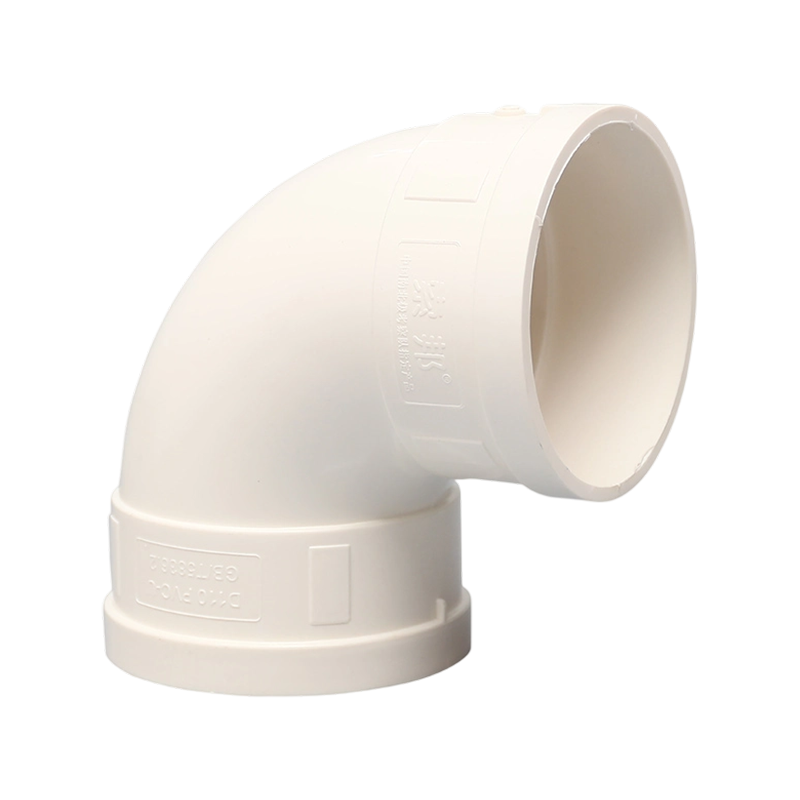
Diameter also matters: as pipe size increases, the absolute difference in wall thickness grows. A 6-inch Schedule 80 pipe has a wall nearly 0.28 inches thicker than its Schedule 40 counterpart, making it significantly stiffer. When burying pipe under roads or heavy loads, that stiffness reduces deflection and protects against crushing. If you pair a 90-degree PVC elbow with Schedule 80 pipe, the assembly can handle repeated thermal cycles without stress cracking—an important consideration for commercial HVAC condensate drains.
PVC Pipe Connection Methods: Which One Fits Your Project?
Choosing the right pipe is only half the battle. The jointing technique you select determines installation speed, long-term leak resistance, and serviceability. PVC pipes support four main connection types. Each has a distinct set of tools, curing times, and pressure ratings.
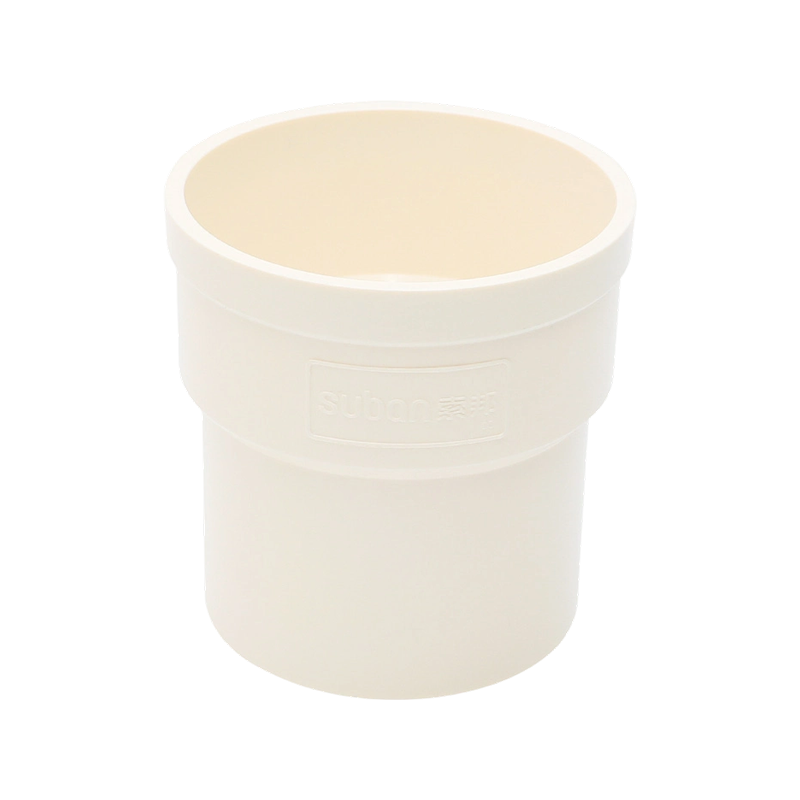
- Solvent Cement (Glue) Joining: The most common method for PVC-U and CPVC. A primer softens the surface, then solvent cement chemically welds pipe and fitting into a single piece. Cure time is 15–30 minutes for small diameters at room temperature, but full pressure rating requires 24 hours. Joints are permanent, leak-free, and rated to the pipe’s pressure class. Use a high-quality PVC coupling to ensure alignment.
- Threaded Connections: Male and female tapered threads (NPT or BSP) allow disassembly. Threaded fittings reduce wall section at the root of the threads, so the system pressure rating drops by 50% compared to the plain pipe. Best for low-pressure repair points or where periodic access is required. Thread sealant tape or paste is mandatory.
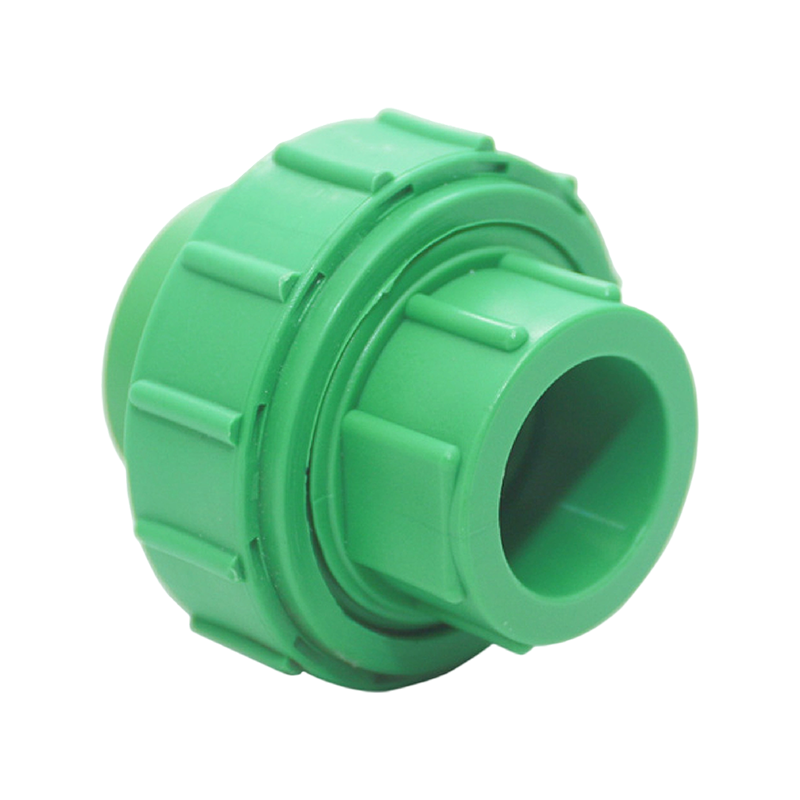
- Heat Fusion (for CPVC and some PVC-U): CPVC can be socket-fused using a specialized iron, similar to PPR welding. The pipe and fitting are heated to 500–540°F, then pushed together to form a homogeneous joint. Fusion joints achieve full pressure rating instantly and eliminate the risk of solvent contamination. However, the equipment cost is higher, and the process demands operator training.
- Mechanical Couplings & Flanges: Flexible rubber couplings, compression fittings, and bolted flanges allow quick assembly and disassembly without heat or chemicals. Flanges suit large-diameter industrial lines above 4 inches. Flexible couplings absorb vibration and ground movement, making them ideal for underground transitions between PVC and other materials.
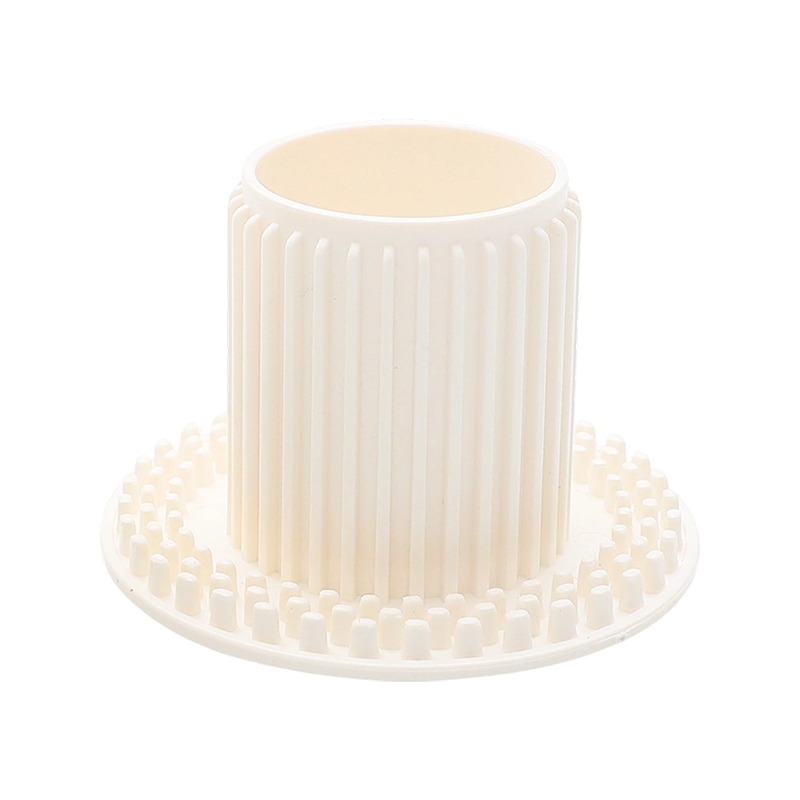
For buried drainage systems, solvent-welded joints are the default standard because they prevent root intrusion and resist soil pressure. Above ground, threaded or flanged connections simplify valve maintenance. A PVC floor drain often integrates a threaded grate, allowing easy cleaning without cutting pipe.
PVC Pipe Applications: Where Each Type Excels
Matching pipe type and schedule to the right application prevents catastrophic failures. The following table maps common scenarios to the recommended PVC variant and its critical boundary conditions.
| Application | Recommended Pipe Type | Key Limitations |
|---|---|---|
| Residential cold water supply | PVC-U Schedule 40 | Do not use above 140°F; not for potable hot water |
| Residential hot & cold water | CPVC (PVC-C) SDR 11 | Requires CPVC-specific cement; max. continuous 200°F |
| Gravity drainage (DWV) | PVC-U Schedule 40 or DWV grade | Low pressure only; use proper slope (1/4" per ft) |
| High-pressure irrigation mains | PVC-O PN16 or PN25 | Excellent water hammer resistance; can be buried at shallow depth |
| Underground electrical conduit | PVC-U Schedule 40 or 80 | Schedule 80 required under roads; use sweeping elbows |
| Chemical process piping | CPVC Schedule 80 | Check chemical compatibility; derate pressure above 140°F |
| Sanitary sewer force mains | PVC-U Schedule 80 or PVC-O | Pressure class must exceed pump shut-off head |
| Air conditioning condensate drain | PVC-U Schedule 40 | Insulate to prevent sweating; use traps to block air leaks |
| Mining and abrasive slurry | PVC-Hi with ceramic lining | Regular wall thickness checks; impact modifiers reduce erosion |
In agricultural settings, PVC-O has become the go-to material for center-pivot irrigation. It can handle the cyclic pressure spikes that occur when end guns shut off, and its lighter weight reduces fuel consumption during transport. A 6-inch PVC-O pipe can be 30% lighter than an equivalent schedule 40 PVC-U pipe with the same pressure rating. That translates directly into lower installation cost and fewer workers required in the field.
How to Choose the Right PVC Pipe: A Decision Matrix
When temperature, pressure, fluid type, and budget collide, a structured comparison simplifies the decision. The matrix below assigns a 1–5 star rating to each pipe family against six common project scenarios. A higher star count indicates a stronger fit; blank cells mean "not recommended."
| Scenario | PVC-U Sch 40 | CPVC | PVC-O | PVC-Hi | PVC-M |
|---|---|---|---|---|---|
| Indoor cold water (max 120°F) | 5 | 4 | 3 | 1 | 3 |
| Indoor hot water (140–180°F) | 0 | 5 | 0 | 0 | 0 |
| High-pressure irrigation (>200 psi) | 2 | 2 | 5 | 1 | 4 |
| Rocky burial, frequent freeze-thaw | 1 | 2 | 3 | 5 | 3 |
| Chemical plant (acids, alkalis) | 1 | 5 | 1 | 1 | 2 |
| DIY home plumbing on a budget | 5 | 3 | 2 | 1 | 2 |
CPVC dominates any scenario that touches hot water or aggressive chemicals. That single feature accounts for its premium price—roughly 2.5 times the cost of PVC-U. For the vast majority of cold-water plumbing and low-pressure drainage, PVC-U remains the workhorse. If your project site presents sharp rocks or expansive clay soils, PVC-Hi is the insurance policy that prevents costly repairs.
Always verify local plumbing codes. Some jurisdictions mandate CPVC for all potable water, while others permit PVC-U only for the building drain. When in doubt, a phone call to the building inspector saves days of rework.
International Standards for PVC Pipes (ASTM, ISO, BS, JIS)
Global trade in PVC pipes relies on well-defined standards that set dimensions, material properties, and test methods. Buyers sourcing from multiple countries need to specify the correct standard to ensure compatibility.
- ASTM D1785 – U.S. standard for PVC-U and CPVC schedule 40, 80, and 120 pressure pipe.
- ASTM D2665 – U.S. standard for PVC-U DWV pipe and fittings.
- ISO 1452 – International series covering PVC-U, PVC-O, and CPVC for water supply and drainage; commonly adopted in Europe, Asia, and the Middle East.
- BS 3505 / BS 3506 – British standards for unplasticized and chlorinated PVC pipes for cold/hot water; largely superseded by ISO 1452 but still referenced.
- JIS K6741 – Japanese industrial standard for rigid PVC pipes, widely used in Southeast Asia.
- NSF/ANSI 61 – North American standard for drinking water system components; certifies that the pipe does not leach harmful contaminants.
When exporting to markets like Australia or the Gulf Cooperation Council, referencing ISO 1452-2 with a PN (nominal pressure) rating becomes essential. A pipe marked "PN16" means it has been tested to a 16-bar (232 psi) pressure rating at 20°C. Requesting third-party certification—such as a WaterMark or WRAS approval—can speed up customs clearance.
Our Product //
Recommend Products
 +86-13801995968
 +86-18017886575
 No. 366, Lane 6995, Puxing Road, Fengxian District, Shanghai
Copyright © SHANGHAI PILSA PIPE INDUSTRY CO., LTD. All rights reserved.

