

 en
en
 English
 русский
 Español
 عربى
عربى


Polymer Pipe Technology: HDPE vs PE-RT vs PPR Cost-Performance Matrix
Industry News-Content
- 1 Material Comparison: HDPE, PE-RT, PPR, and PVC-U
- 2 Composite Reinforcement: How PFRT-Wrapped HDPE Boosts Pressure Capability
- 3 Lifecycle Cost Analysis: Polymer vs. Steel vs. Concrete
- 4 Smart Pipe Technologies: RFID Tracking and Leak Detection
- 5 Application-Specific Selection Guide: Oil & Gas, Water, Mining, Building
- 6 Extreme Environment Performance: Low-Temperature and High-Temperature Data
- 7 Future Trends: Self-Healing Coatings, Biodegradable Polymers, and AI Monitoring
Over 60% of new North American water distribution mains are now polyethylene. The reason: a 50-year design life without cathodic protection, zero internal corrosion products, and a total installed cost that undercuts ductile iron by 20–35%. Polymer pipe technology has moved far beyond early PVC, and today’s HDPE, PE-RT, PPR, and PVC-U systems solve problems steel and concrete never could.
The real decision isn’t whether to use polymer — it’s which polymer, in which grade, bonded by which joining method, and matched to which operating envelope. This article gives you a crisp, data-rich comparison across the four dominant materials, then unpacks composite reinforcement, lifecycle economics, smart tracking, and application-specific selection so you can spec the right system on day one.
- HDPE (PE4710): Buried oil, gas, mining, water mains — high toughness, butt-fused joints.
- PE-RT (Type II): Industrial heating/cooling, floor heating, snow melt — elevated temperature resistance, flexible.
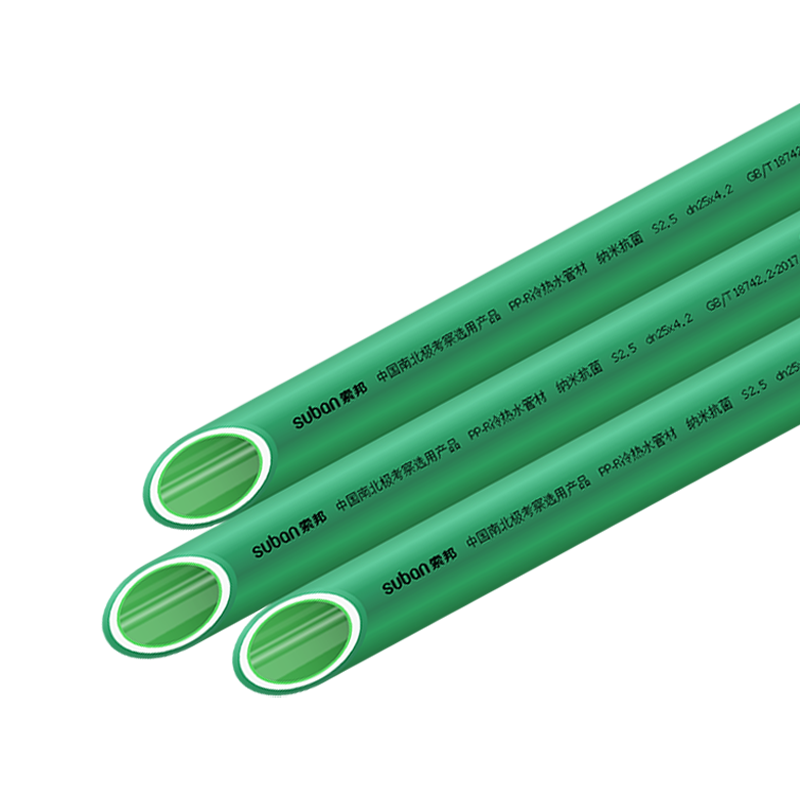
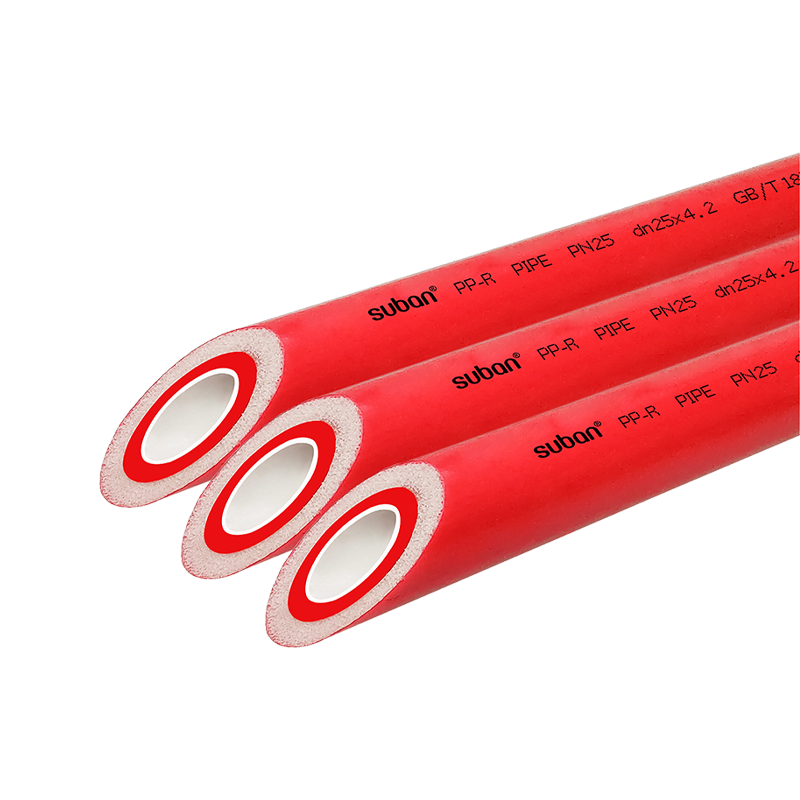
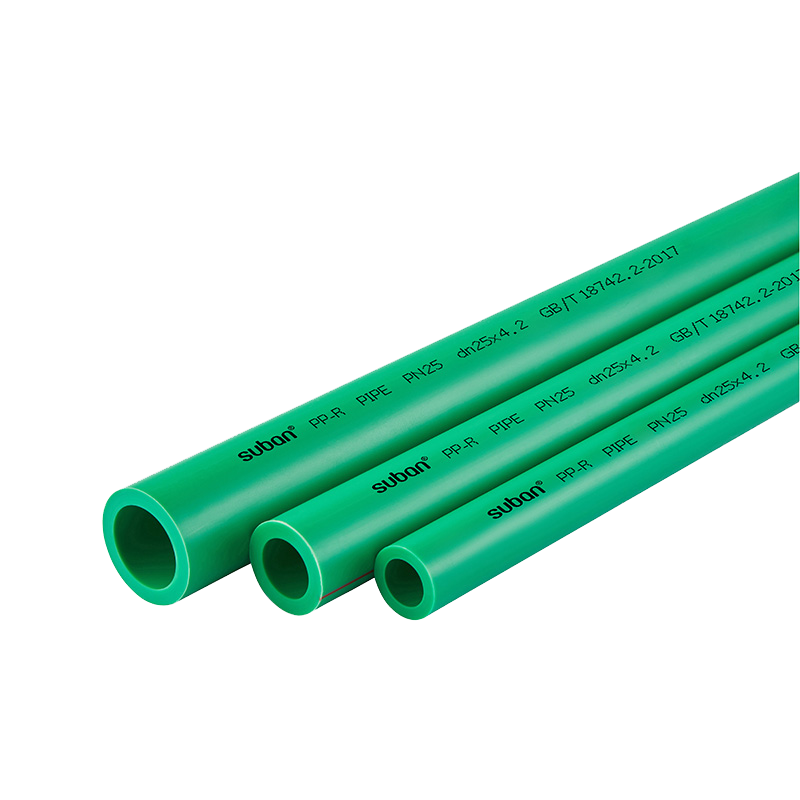
- PPR: Hot/cold building plumbing, district heating laterals — rigid, heat-fused, excellent chemical resistance.
- PVC-U: Gravity sewer, irrigation, conduit — low cost, solvent-welded or gasketed joints.
Material Comparison: HDPE, PE-RT, PPR, and PVC-U
Four polymer families dominate the market, each with a distinct pressure-temperature envelope and jointing regime. HDPE (PE4710) covers the widest range, from sub-0°C gas gathering to 60°C water. PE-RT steps in where sustained temperatures above 60°C are required, while PPR handles both pressure and temperature with stiff, heat-fused plumbing lines. PVC-U remains the economic choice for low-pressure conveyance and gravity systems.
ASTM D3350 cell classification and ISO 9080 long-term hydrostatic strength curves define the performance ceiling. The table below maps six practical parameters that directly affect system design and capital cost.
| Parameter | HDPE (PE4710) | PE-RT (Type II) | PPR | PVC-U |
|---|---|---|---|---|
| Density (g/cm³) | 0.95 | 0.94 | 0.91 | 1.40 |
| Operating temperature range | -40°C to 60°C | -40°C to 95°C | 0°C to 70°C | 0°C to 60°C |
| Typical pressure class | PN10–PN25 (PE4710) | PN10–PN20 | PN10–PN25 | PN6–PN16 |
| Joining method | Butt fusion, electrofusion | Butt fusion, compression | Heat fusion (socket) | Solvent weld, gasket |
| Relevant standards | ASTM F714, AWWA C906 | ASTM F2769, ISO 22391 | ISO 15874, DIN 8077 | ASTM D1785, AWWA C900 |
| Typical service life at design pressure | 50+ years | 50+ years | 50+ years | 50+ years |
The joining method alone often drives the installation cost. Butt-fused HDPE eliminates gaskets and mechanical couplings along the run, while PPR hot melt pipe fittings provide monolithic, leak-free building plumbing with zero maintenance access points. For large-diameter water transmission, AWWA C906-compliant HDPE delivers a single monolithic string with a lower carbon footprint per meter than ductile iron.
Composite Reinforcement: How PFRT-Wrapped HDPE Boosts Pressure Capability
Standard solid-wall HDPE pipe reaches economic limits around PN25. For 350–750 psi (roughly PN24–PN50) applications, composite reinforcement adds continuous E-glass fibers encapsulated in an HDPE matrix — a structure known as poly-fiberglass reinforcement tape (PFRT). The core remains standard PE4710 or PE-RT, preserving chemical resistance and fusion compatibility, while the fiber wrap carries hoop stress.
The result: a pipe with the corrosion immunity of HDPE and the pressure capacity of fiberglass, but without the brittle failure modes typical of FRP/GRE pipes. HDPE’s ductility absorbs impact and ground movement far better than a pure thermoset composite.
| Pressure rating (psi) | Standard HDPE wall (in.) | Composite HDPE wall (in.) | Weight reduction vs. standard HDPE |
|---|---|---|---|
| 350 | 1.84 | 0.67 (core) + 0.15 (wrap) | ~45% |
| 550 | 2.89 | 0.82 (core) + 0.27 (wrap) | ~48% |
| 750 | 3.96 | 1.00 (core) + 0.40 (wrap) | ~50% |
Weight savings of 45–50% directly cut transport and handling costs on remote oilfield or mining installations. Because the outer surface is still HDPE, butt-fusion joining requires no retraining of crews, and the embedded RFID tag — discussed later — links every joint back to resin batch and lamination data.
Lifecycle Cost Analysis: Polymer vs. Steel vs. Concrete
Corrosion is the biggest hidden tax on rigid piping. Steel corrodes at an average rate of 0.1–0.2 mm/year in mildly aggressive soils; concrete spalls under sulfate attack. By contrast, polyethylene and polypropylene are inert. Over a 50-year window, the difference in maintenance and replacement events reshapes the NPV equation decisively.
Consider a 24-inch water transmission main over 10 km. Steel requires periodic relining or cathodic protection retrofits. Concrete may demand joint sealing after 30 years. The polymer alternative, once fused, stays hydraulically smooth and leak-free through its design life.
| Cost item | Polymer (HDPE) | Steel (coated/wrapped) | Concrete (PCCP) |
|---|---|---|---|
| Material & installation | $4.2M | $5.8M | $6.0M |
| 50-year maintenance (NPV) | $0.2M | $2.1M | $1.8M |
| Replacement at 50 years | None | Full | Partial |
| Total LCC (NPV) | $4.4M | $13.7M | $9.6M |
The polymer system saves 55–68% on a total cost basis, driven almost entirely by the elimination of steel’s cathodic protection and recoating cycles. This differential widens in soils with resistivity below 2,000 ohm-cm, where external corrosion accelerates dramatically.
Smart Pipe Technologies: RFID Tracking and Leak Detection
Piping systems now operate as data assets, not just material conduits. Two technologies have reached commercial maturity: RFID-embedded fusion joints and distributed fiber-optic sensing.
- RFID tag integration: A passive UHF RFID tag is inserted between the protective cover and the composite reinforcement layer during manufacturing. Each tag stores resin batch, extrusion date, and fusion parameters. Field readers log GPS coordinates at installation. Error rates in joint traceability drop from 5–10% with paper logs to below 0.1%, giving asset owners a digital twin from day one.
- Fiber-optic leak detection: A single-mode fiber bonded along the pipe exterior detects strain and temperature anomalies with a spatial resolution of ±1 m. In pilot installations, leak localization time dropped from hours (manual walk-the-line) to under three minutes, reducing product loss and environmental exposure.
Neither technology adds more than 2–4% to the pipe’s upfront cost, yet both pay back within one unplanned excavation event avoided.
Application-Specific Selection Guide: Oil & Gas, Water, Mining, Building
Choosing the right material means matching the pipe’s pressure-temperature rating to the phase behavior of the medium and the installation environment. The matrix below distills dozens of project specifications into a practical selection reference.
| Sector | Material | Design pressure | Typical wall/SDR | Key standard |
|---|---|---|---|---|
| Oil & gas gathering | HDPE (PE4710) | 150–750 psi | SDR 7.3–SDR 17 | API 15LE |
| Municipal water transmission | HDPE | 100–250 psi | SDR 11–SDR 17 | AWWA C906 |
| Mining slurry lines | HDPE / composite | 200–550 psi | SDR 9–SDR 13.5 | ASTM F714 |
| Industrial chemical drain | PPR | PN10–PN16 | SDR 6–SDR 11 | ISO 15874 |
| Radiant floor heating | PE-RT | 60–100 psi | 15–20 mm (OD) | ASTM F2769 |
| Building plumbing (hot/cold) | PPR | PN20–PN25 | SDR 6–SDR 7.4 | ISO 15874 |
For building plumbing, the shift toward PE-RT underfloor heating pipe has been accelerating because of its 5D bend radius and continuous coil lengths that eliminate buried fittings. In mining, the combination of PE4710’s abrasion resistance and the weight savings of composite reinforcement extends pipe life in tailings lines by three to five times over steel.
Extreme Environment Performance: Low-Temperature and High-Temperature Data
Polymers undergo a ductile-to-brittle transition at low temperatures that varies sharply by chemistry. PE-RT retains 70% of its room-temperature impact strength at -40°C, while unmodified PPR drops below its glass transition near 0°C and becomes susceptible to crack propagation. This matters for arctic waterlines, above-ground LNG piping, or cold-climate building services.
| Temperature | HDPE (PE4710) | PE-RT (Type II) | PPR |
|---|---|---|---|
| -20°C | 85% | 90% | 40% |
| -40°C | 75% | 70% | Not recommended |
| 95°C (elevated) | 35% | 60% | 55% |
At the high end, PE-RT maintains design stress well above 95°C for hot- water and low-pressure steam condensate, while standard HDPE derates rapidly. Designers specifying for desert solar thermal fields or Arctic water supply can now back their material choices with ISO 9080 long-term regression data rather than rule-of-thumb.
Future Trends: Self-Healing Coatings, Biodegradable Polymers, and AI Monitoring
Three emerging trajectories will reshape polymer pipe technology over the next decade, moving from lab-scale validation toward limited commercial deployment.
- Self-healing coatings: Microencapsulated polyurea elastomers and reversible Diels-Alder networks can repair minor surface abrasions autonomously when the pipe is struck or scratched during backfill. Pilot trials on 12-inch water mains reduced coating breach propagation by 80% in a 2-year monitored installation. Maturity: small-scale commercial.
- Biodegradable polymer temporary piping: Polyhydroxyalkanoate (PHA) blends are being developed for mining and construction dewatering that decompose naturally after 18–36 months, eliminating retrieval cost. Maturity: field trials.
- AI-driven predictive maintenance: Machine learning models trained on fiber-optic strain and flow data predict joint fatigue and third-party intrusion events with lead times of 2–6 hours. Coupled with automated valve networks, this shifts the paradigm from reactive repair to preemptive isolation. Maturity: pilot/commercial integration.
These trends don’t replace today’s PE4710 or PE-RT; they layer intelligence and material resilience onto systems already proven for 50-year service. Forward-looking operators are specifying pipe that is sensor-ready, even if sensors aren’t active from day one.
Our Product //
Recommend Products
 +86-13801995968
 +86-18017886575
 No. 366, Lane 6995, Puxing Road, Fengxian District, Shanghai
Copyright © SHANGHAI PILSA PIPE INDUSTRY CO., LTD. All rights reserved.

