

 en
en
 English
 русский
 Español
 عربى
عربى


Antibacterial PPR Pipe: How Crystal-Surface Technology Protects Tap Water
Industry News-Content
The Part of Your Plumbing Nobody Thinks About
Most renovation budgets go toward the fixtures people can see: faucets, water heaters, filtration units. The pipe carrying water to all of them rarely gets a second look, even though it stays in constant contact with drinking water for decades.
PPR (polypropylene random copolymer) pipe with an uneven inner wall creates a rougher surface at the microscopic level. Warm weather accelerates bacterial and algal metabolism, and once microorganisms attach to that rough surface, they secrete extracellular polymers that build into a biofilm. Left alone, biofilm doesn't rinse away with normal water flow — it discolors the pipe wall, produces odor, and steadily degrades water quality at the tap.
What Crystal-Surface Technology Actually Changes
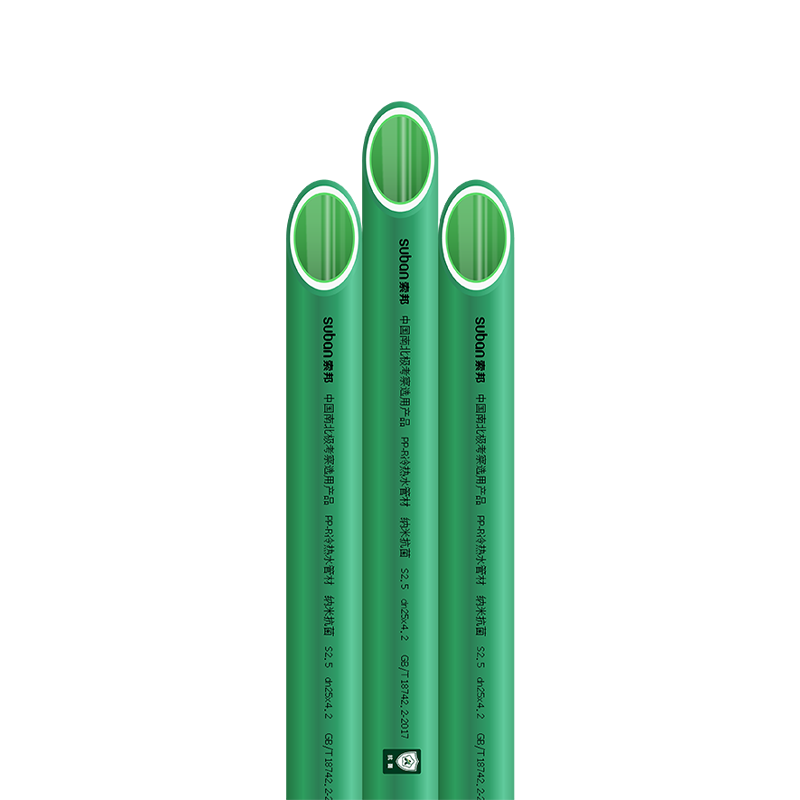
Crystal-surface polishing on the inner wall increases smoothness by roughly 1.5 times compared to standard PPR pipe. A smoother wall gives microbes and mineral scale fewer places to grip, cutting the problem off at the physical level rather than treating it after it appears.
Layered on top of that is silver-ion antibacterial technology. Silver ions disrupt the permeability of a microbe's cell membrane and interfere with its respiratory metabolism, which suppresses reproduction. Third-party testing from Guangzhou Institute of Microbiology Group reported a 99.99% inhibition rate against E. coli and Staphylococcus aureus — two indicator organisms commonly used to flag risk in municipal water systems.
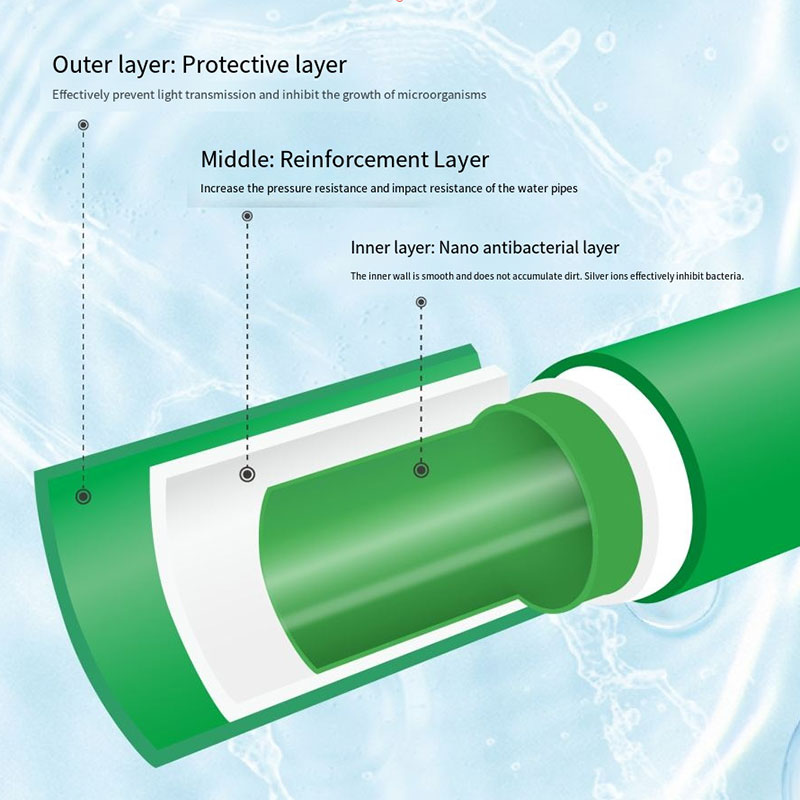
A light-blocking layer rounds out the design. Algae need visible light to photosynthesize, so pipe sections installed in well-lit areas — balconies, bathrooms, exposed runs — are particularly prone to growth without this barrier. Blocking that light cuts off the growth condition instead of relying on cleaning after algae appears.
Heat, Pressure, and the Test of Time
Antibacterial performance solves one problem; structural durability solves another. This pipe holds up to 70°C for long-term use and tolerates spikes up to 95°C. Its creep resistance — the material's ability to resist slow, permanent deformation under sustained pressure, even below its yield strength — exceeds national standard requirements, which matters most in high-rise buildings and larger homes where water pressure fluctuates throughout the day.
The pipe wall itself is a three-layer composite: an outer protective layer for light-blocking and initial impact resistance, a reinforced middle layer for pressure and impact strength, and the antibacterial inner layer described above. Each layer does one job, rather than relying on extra wall thickness alone to carry the load.
| Metric | National Standard | Manufacturer Standard |
|---|---|---|
| Test pressure | 0.8 MPa | 1.2 MPa |
| Pressure drop after 30-min hold | Below 0.06 MPa | Below 0.01 MPa |
1.2 MPa is more than double the 0.45 MPa maximum pressure typical municipal water systems reach, which builds in a wide safety margin on top of everyday demand.
Two Habits Worth Building Into Summer Water Use
Pipe quality only covers part of the picture. Two small habits reduce strain on any plumbing system during hot months:
- Avoid heavy water draw during midday peak heat — repeated thermal expansion and contraction wears on joints and fittings over time.
- Shut off the main valve and drain standing water before extended trips away from home, since stagnant water is where bacteria multiply fastest.
Installers should also pressure-test every welded joint after installation and tap hot-melt welds with a rubber mallet, checking for seepage as a quick secondary check on weld quality.
Choosing a Pipe You Won't Think About Again
Water piping is a hidden system — once it's behind a wall or under a floor, replacing it is disruptive and expensive. That makes long-term reliability a more useful buying criterion than upfront price alone.
Between the smooth antibacterial inner wall, the three-layer composite structure, and pressure testing that runs well past national minimums, this pipe is built around the specific failure points — biofilm, algae, pressure fluctuation, thermal cycling — that standard piping tends to overlook.
Full specifications and test reports are available on the antibacterial PPR pipe product page.
Our Product //
Recommend Products
 +86-13801995968
 +86-18017886575
 No. 366, Lane 6995, Puxing Road, Fengxian District, Shanghai
Copyright © SHANGHAI PILSA PIPE INDUSTRY CO., LTD. All rights reserved.

