

 en
en
 English
 русский
 Español
 عربى
عربى


Plastic Drainage Buyer’s Guide: HDPE vs PVC vs PPR for Your Yard & Home
Industry News-Content
- 1 Why Plastic Drainage? Key Benefits Over Concrete & Metal
- 2 The 3 Main Types of Plastic Drainage Pipes (HDPE, PVC, PPR)
- 3 How to Choose the Right Plastic Drainage for Your Project
- 4 Plastic Drainage Installation: Step-by-Step Guide
- 5 Common Plastic Drainage Problems & How to Fix Them
- 6 Cost Comparison: Plastic vs Concrete vs Metal Drainage
- 7 Where to Buy Plastic Drainage Products (Wholesale & Retail)
A flooded driveway after a summer storm turns a crisp entrance into a hazard within minutes. The water pools, the asphalt heaves, and the real culprit isn’t the rain — it’s the undersized or broken drain pipe silently failing beneath the surface. Homeowners and contractors facing that scene need a solution that balances cost, longevity, and ease of install. Plastic drainage systems now control water across millions of properties, yet choosing the wrong material or skipping a single installation step can turn a 15-year asset into a 3-year headache.
This guide breaks down every layer of the decision: material chemistry, structural numbers, side-by-side cost timelines, and installation techniques that keep the ground dry. We draw on field data from projects ranging from backyard French drains to commercial slot drains, including extreme-cold performance feedback from Antarctic research station partnerships where plastic pipe endures sustained -30°C ground temperatures.
Why Plastic Drainage? Key Benefits Over Concrete & Metal
When a trench is dug and pipe is laid, the material decides how long that trench stays open. Concrete has ruled drainage for centuries because of its crush strength, but it rusts rebar, cracks in freeze-thaw cycles, and demands heavy equipment. Galvanized steel resists impacts yet corrodes from the inside out in acidic soil. Plastic — in its three engineered forms — sidesteps those weaknesses.
Five performance dimensions separate plastic from traditional hardscape drainage:
- Weight per 10-foot section: A 4-inch PVC pipe weighs 2.2 lb; equivalent concrete pipe weighs 28 lb. Hand-carrying and DIY installation drop sharply.
- Material cost per linear foot: Plastic (HDPE corrugated, PVC solid) ranges from $0.50 to $3.50/ft. Concrete pipe starts at $6/ft, and cast iron exceeds $15/ft.
- Corrosion resistance: Plastic does not rust, scale, or pit in contact with groundwater acids, road salt, or septic effluent. Concrete spalls and steel perforates within 10–15 years in aggressive soil.
- Design life: Buried PVC and HDPE pipes carry a 50–100-year service life rating under ASTM D2729 and AASHTO M252. Concrete culverts often require relining by year 30.
- Installation speed: A two-person crew can lay 100 ft of plastic pipe in under 4 hours, compared to 10 hours for heavy concrete sections that need mechanical lifting.
The trade-off: plastic can deform under extreme vehicle loads if not properly bedded, and it softens above 140°F — irrelevant for underground drainage but a limit for exposed rooftop lines. For load-bearing areas like driveways, schedule 40 PVC or reinforced HDPE with a structured wall avoids deflection when backfilled with granular material.
The 3 Main Types of Plastic Drainage Pipes (HDPE, PVC, PPR)
Contractors often group “plastic drainage” into one bucket, but HDPE, PVC, and PPR behave like distinct tools. Each targets different flow rates, installation techniques, and temperature windows. Choosing the wrong type leads to ruptured joints, cracked stone beds, or code violations in plumbing stacks.
| Property | HDPE Corrugated | PVC (Sch. 40 / DWV) | PPR (Polypropylene Random) |
|---|---|---|---|
| Compressive strength | 40–60 psi (flexible) | 400–600 psi | 200–300 psi |
| Temperature range | -40°F to 140°F | 32°F to 140°F (140°F max) | -4°F to 176°F |
| Typical connection | Snap/slide coupling, soil-tight | Solvent weld, gasketed bell | Heat fusion (socket or butt) |
| Cost per foot (4") | $0.75–$1.50 | $1.50–$3.50 | $2.00–$4.50 (specialty) |
| Best application | French drains, farm fields, flexible bends | Downspout tie-ins, catch basins, slot drains | Indoor waste stacks, high-temperature effluent |
HDPE corrugated pipe dominates agricultural and landscape drainage because it unrolls like a ribbon and curves around roots without fittings. Its single-wall version handles light surface loads, while dual-wall HDPE adds a smooth interior for higher flow — 30% less friction than corrugated alone. PVC steps in where rigidity matters: catch basin connections, driveway slot drains, and any above-ground run that must hold slope under sun exposure. Solvent-welded joints become monolithic, which eliminates soil intrusion. PPR, often overlooked in outdoor drainage, excels inside the building envelope. Its heat-fused joints create a seamless system that withstands 176°F discharge from dishwashers or laundry, exceeding PVC’s limit.
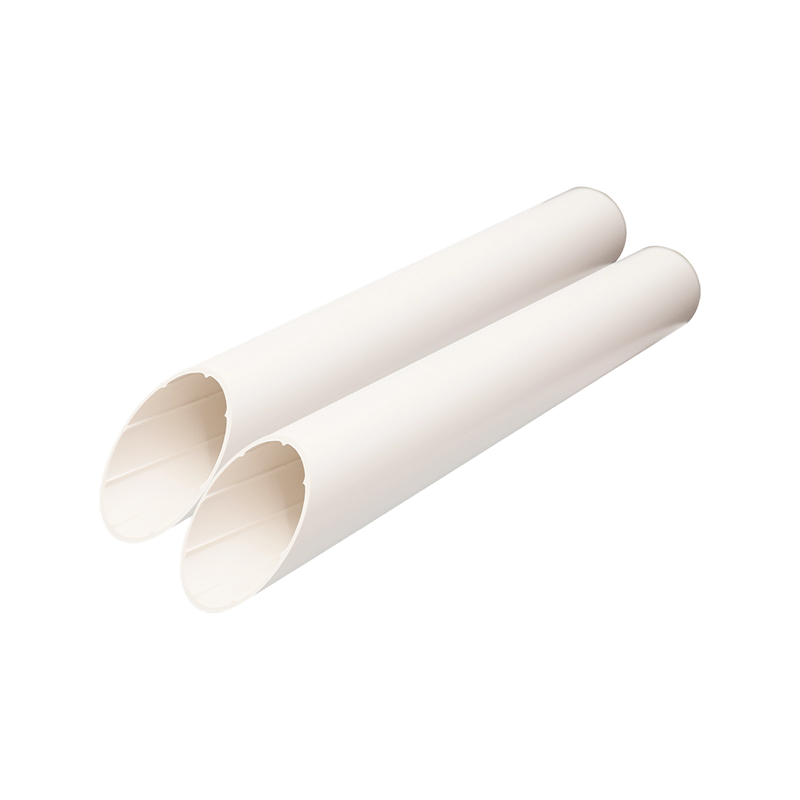
For multi-story residential drainage where water noise travels through pipe walls, a spiral PVC drainage pipe reduces flow noise by 8–12 dB through air-core channeling. This technology, which we manufacture with a co-extruded spiral inner rib, meets acoustic codes without blanket insulation.
How to Choose the Right Plastic Drainage for Your Project
Drainage isn’t one-size-fits-all. A yard with soggy spots demands infiltration, while a driveway demands rapid collection and conveyance. Error on the side of over-sizing; a 4-inch pipe handles 240 GPM at 1% slope, but adding a second catch basin and doubling pipe diameter quadruples capacity. Follow the scenario matrix below to narrow your selection before ordering.
| Project | Recommended Pipe | Key Parameters |
|---|---|---|
| Yard / French drain | 4" HDPE corrugated, perforated | Slope 1% minimum, wrapped in geotextile, buried 12–18" deep |
| Driveway / patio slot drain | 4–6" PVC solid, schedule 40 | Load rating Class B, 1% slope, concrete encasement at edges |
| Basement sump discharge | 1.5–2" PVC Sch. 40 | Check valve required, extend 10 ft from foundation, slope away at 2% |
| Green roof drainage | 3–4" PVC or HDPE perforated | Under 4" of growing media, connect to roof drain with leaf guard |
| Cold climate (frost depth >30") | Dual-wall HDPE or PVC with 1.5x wall thickness | Bury below frost line, add 1" rigid foam insulation board above trench |
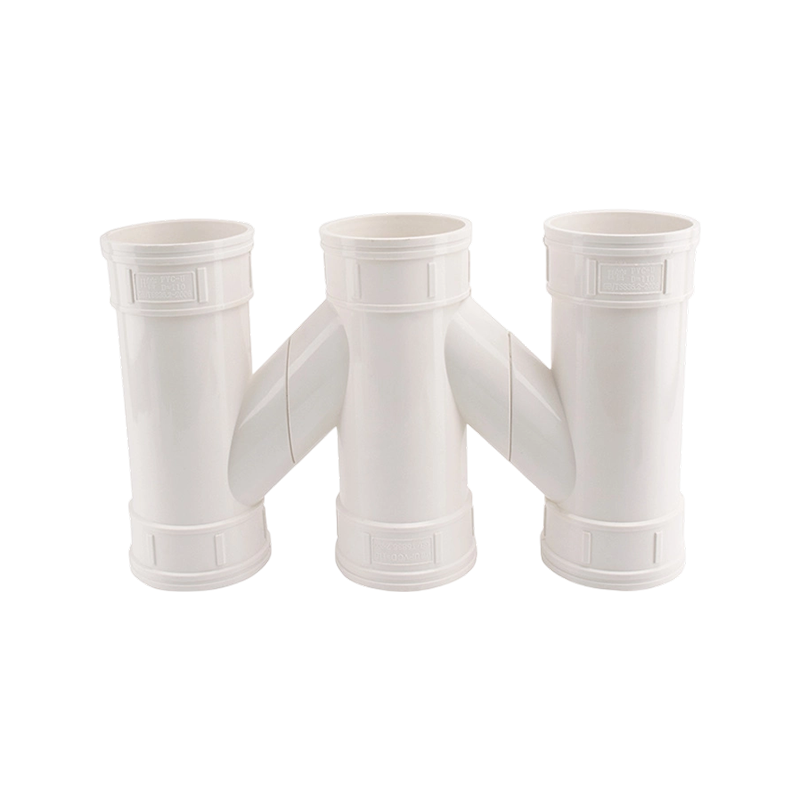
In northern regions where frost penetrates 36 inches or more, standard burial depth suffices only if the pipe stays below that line. Our PVC pipeline systems undergo repeated freeze-thaw cycle testing — including field data from Antarctic station installations — confirming no brittle fracture at -22°F when wall thickness is increased to schedule 80. For DIY cold-weather protection, a 1-inch layer of XPS foam above the pipe delays frost propagation enough to prevent ice blockage in early spring.
Plastic Drainage Installation: Step-by-Step Guide
Poor slope and weak joints erase the advantage of even the best pipe. A 1% grade error over 50 feet means water sits in the pipe instead of flowing — and 1% is just 1/8 inch drop per foot, checked with a laser level, not a string. The following sequence covers 90% of residential plastic drain projects, from trench to finish grade.
- Mark and plan the route. Call 811 for utility locates. Design from downstream outlet backward; water must exit to daylight or a sump pit. For French drains, plan a discharge point at least 10 ft from foundation.
- Excavate the trench. Width: pipe diameter plus 12 inches. Depth: minimum 12 inches for light loads, 18–24 inches for vehicular areas; below frost line in freezing climates. Maintain uniform slope of 1% (1/8" per ft) using a transit level. Check every 10 ft.
- Prepare the bed. Add 2–4 inches of crushed stone (3/4" angular) in the bottom. Compact with a hand tamper. The stone bed prevents settlement and cushions the pipe.
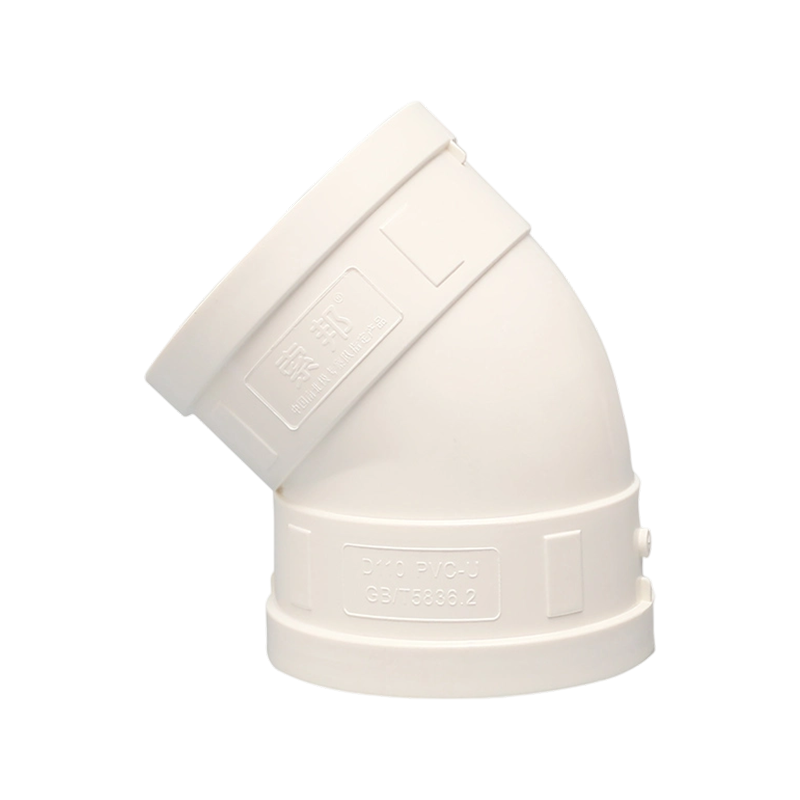
- Lay and connect the pipe. For PVC, apply solvent cement evenly in one continuous motion, fully insert the pipe into the fitting, and hold for 30 seconds to prevent push-out. For HDPE, ensure couplings snap tight and use soil-tight adapters at catch basins. When changing direction, use a 45° PVC elbow instead of a sharp 90° to keep debris moving.
- Backfill and compact. Cover the pipe with an additional 6 inches of stone, then wrap the stone-pipe envelope with geotextile fabric to keep silt out. Backfill with native soil in 6-inch lifts, compacting each layer. Set a surface grade that sheds water away from the structure.
Common Plastic Drainage Problems & How to Fix Them
Even a perfectly installed system degrades if maintenance stops at the surface. Symptoms like slow draining, damp walls, or ground erosion signal one of three root issues. Here’s how to diagnose and remediate each before excavation becomes the only option.
| Problem | Typical Cause | Diagnosis | Fix (DIY cost) |
|---|---|---|---|
| Standing water in pipe | Sediment blockage or slope reversal | Insert a drain camera or flush with water and observe backup | Jetting with hose ($0 if self-cleaned), re-grade if slope shifted ($150–$400 for localized dig) |
| Ice blockage in winter | Insufficient burial depth or no insulation | Check if pipe is above frost line; outlet may freeze first | Thaw with warm water, add foam board cover before next freeze ($2–$3 per sq ft for XPS insulation) |
| Joint leak / soil infiltration | Loose HDPE coupling or cracked PVC solvent weld | Look for soggy spots above pipe run; dye test confirms path | Replace coupling or cut and couple with repair sleeve ($15–$40 in fittings) |
Root intrusion, while less common in plastic than in clay tile, still occurs at HDPE corrugated joints if soil shifts. A physical root barrier (copper sulfate-impregnated fabric) or switching to glued PVC eliminates the pathway. For homes with recurring blockages, retrofitting a cleanout riser at the mid-point of the run allows rodding without digging — a $50 investment that saves hours on future calls.
Cost Comparison: Plastic vs Concrete vs Metal Drainage
Buyers often hyper-focus on per-foot material cost. The real budget hides in freight, excavation time, and the repair bills that arrive year five. Plastic’s light weight collapses freight and handling costs, while its seamless joints slash maintenance over a decade. The table below standardizes a 100-foot residential drain run using 4-inch pipe, accounting for contractor labor in the U.S. Midwest.
| Material | Pipe & Fittings | Installation Labor | 10-Year Maintenance | Total (10-Year) |
|---|---|---|---|---|
| HDPE corrugated | $120 | $600 | $100 | $820 |
| PVC solid (Sch. 40) | $280 | $650 | $80 | $1,010 |
| Concrete pipe | $620 | $1,400 | $400 (joint repair, relining) | $2,420 |
| Cast iron | $1,500 | $1,600 | $350 (corrosion treatment) | $3,450 |
The numbers explain why plastic has captured 80% of residential drainage. Even the higher upfront PVC cost pays back by year three through zero-corrosion maintenance. For budget-sensitive projects where soil conditions are benign, HDPE corrugated remains the per-foot leader with a decade ownership under $900.
Where to Buy Plastic Drainage Products (Wholesale & Retail)
Small yards and single downspout runs fit neatly into a trip to Home Depot or Lowe’s, where 10-foot sticks and coiled HDPE are stocked at big-box retail pricing. That convenience tacks on 20–35% over wholesale unit costs. For a full perimeter French drain or a commercial parking lot, the math shifts toward direct sourcing from a manufacturer that can supply everything from pipe to complete PVC drainage systems and custom assemblies.
When you source from a single factory, joint compatibility headaches disappear. A manufacturing partner with in-house extrusion and molding also enforces QA across fittings, pipe, and adhesives — eliminating the risk of mixing brands that swell at different rates. Our facility, with an annual capacity exceeding 100,000 tons and national quality certifications, serves distributors and contractors with consistent wall thicknesses, traceable lot codes, and material certifications compliant with ASTM D2729 and ISO 8773. For bulk orders or engineered submittal packages, contacting the manufacturer directly compresses lead times and unlocks volume price breaks that retail can’t match.
Our Product //
Recommend Products
 +86-13801995968
 +86-18017886575
 No. 366, Lane 6995, Puxing Road, Fengxian District, Shanghai
Copyright © SHANGHAI PILSA PIPE INDUSTRY CO., LTD. All rights reserved.

