

 en
en
 English
 русский
 Español
 عربى
عربى


Tee Fitting for Water Line: PPR vs Brass vs PVC Compared
Industry News-Content
- 1 What Is a Tee Fitting for a Water Line?
- 2 Material Comparison: PPR, Brass, PVC, and Stainless Steel
- 3 Connection Methods: Which One Is Right for Your Project?
- 4 Step-by-Step Installation Guide for PPR Tee Fittings
- 5 Common Installation Mistakes and How to Fix Them
- 6 Cost Analysis: DIY vs. Professional vs. Bulk Purchase
- 7 How to Choose a Reliable Tee Fitting Supplier
What Is a Tee Fitting for a Water Line?
A single leaking joint in a water line can waste over 10,000 gallons per year. The tee fitting sits at the heart of many such joints—it splits one supply line into two branches or merges two incoming flows into one. In residential and commercial plumbing, this simple T-shaped connector carries the full system pressure, so material choice and installation accuracy matter far more than they first appear.
Plumbers differentiate between equal tees and reducing tees. An equal tee keeps the same diameter on all three openings (e.g., 3/4″ × 3/4″ × 3/4″). A reducing tee narrows one branch, letting you feed a smaller fixture line from a larger trunk. Both types share the same fundamental job: directing water flow without creating turbulence that wastes energy or erodes pipe walls.
- 1/2″ tees supply individual faucets, toilet lines, and dishwasher feeds
- 3/4″ tees handle main branch lines in a typical single-family home
- 1″ and larger tees serve commercial risers, irrigation mains, and high-flow equipment
Material Comparison: PPR, Brass, PVC, and Stainless Steel
No single material dominates every water line. Copper press tees simplify retrofit work, while schedule 80 PVC thrives in pressurized cold-water irrigation. Brass has been the go-to for threaded joints for decades. Polypropylene random copolymer (PPR) has gained traction worldwide because it eliminates corrosion entirely and handles hot and cold water with a single fitting style.
The table below shows how four common materials stack up against the demands of a pressurized water supply. Pay close attention to temperature ceilings and pressure ratings—these dictate whether a tee will last 50 years or fail in the first freeze-thaw cycle.
| Material | Max Working Pressure | Temperature Range | Corrosion Resistance | Unit Cost (USD) |
|---|---|---|---|---|
| PPR | 1.6 MPa (232 psi) at 73°F | -20°F to 203°F | Immune to scale, chlorine, and electrolysis | 0.60–1.50 |
| Brass | 2.0 MPa (290 psi) | -40°F to 250°F | May dezincify in soft water; forms patina but resists deep corrosion | 3.00–8.00 |
| PVC (Schedule 80) | 1.4 MPa (200 psi) at 73°F | 33°F to 140°F | Excellent chemical resistance; brittle in sub-freezing conditions | 0.50–1.80 |
| Stainless Steel | 2.5 MPa (360 psi) | -320°F to 1500°F | Near-total corrosion resistance; chloride crevice corrosion possible in stagnant seawater | 5.00–12.00 |
For drinking water systems, PPR offers a distinct advantage: it contains no lead, no metallic ions that can leach into stagnant water, and its inner surface stays smooth for decades. Brass tees, unless explicitly certified lead-free, may still carry trace lead in North American markets. PVC performs well in cold water alone but cannot handle standard domestic hot water (140°F), which softens the material and drops its pressure capacity sharply. Stainless steel is overkill for most residential applications and dramatically raises material cost without a proportional gain in reliability.
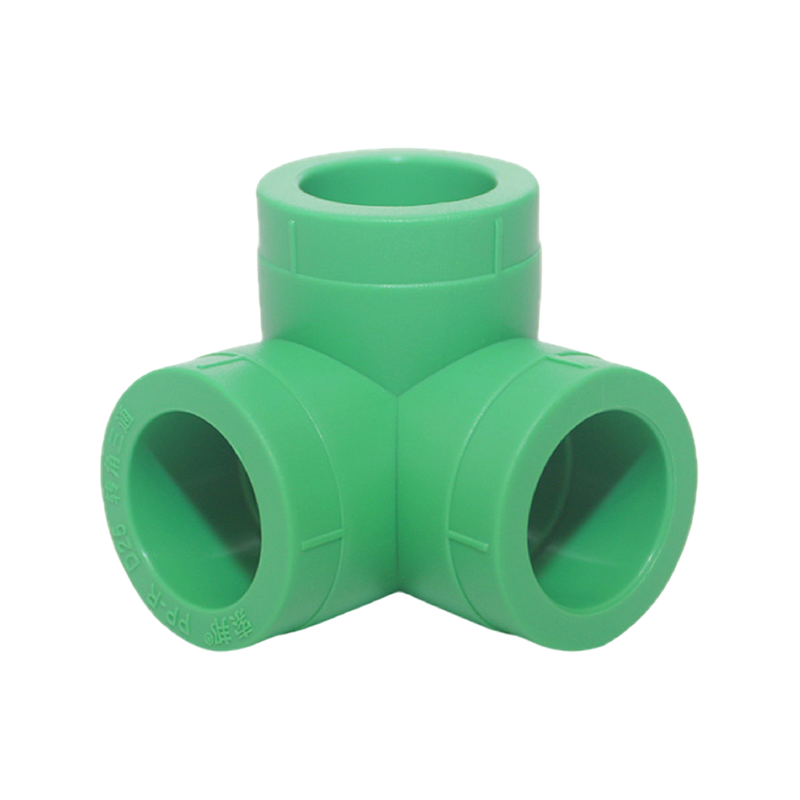
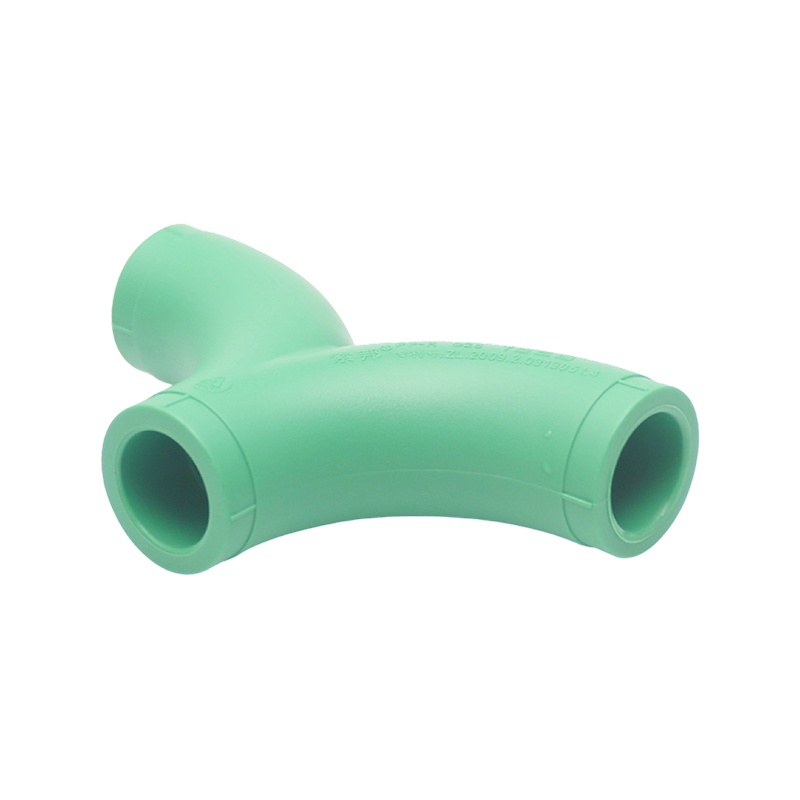
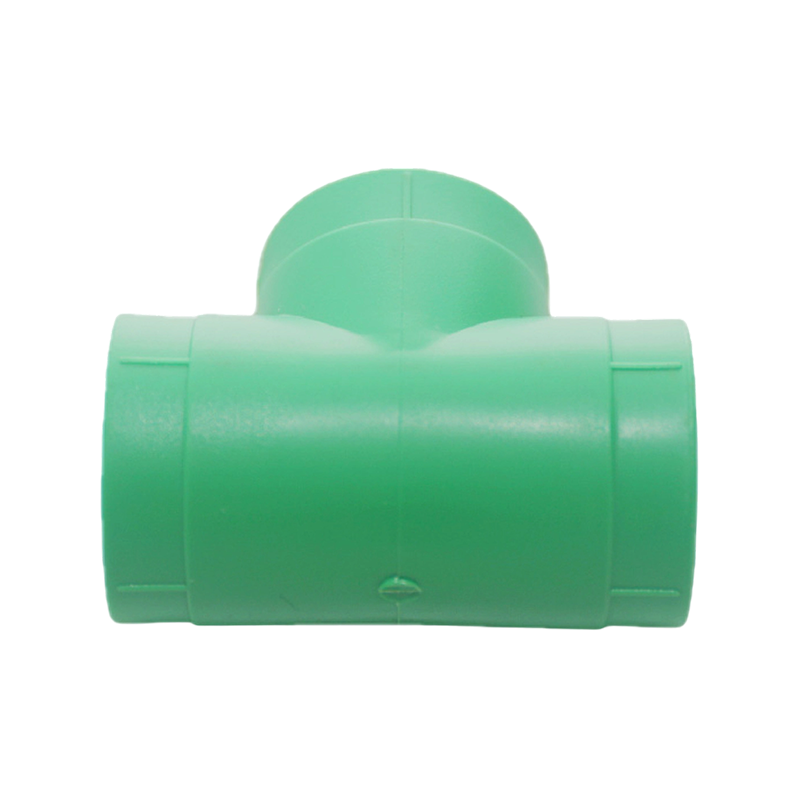
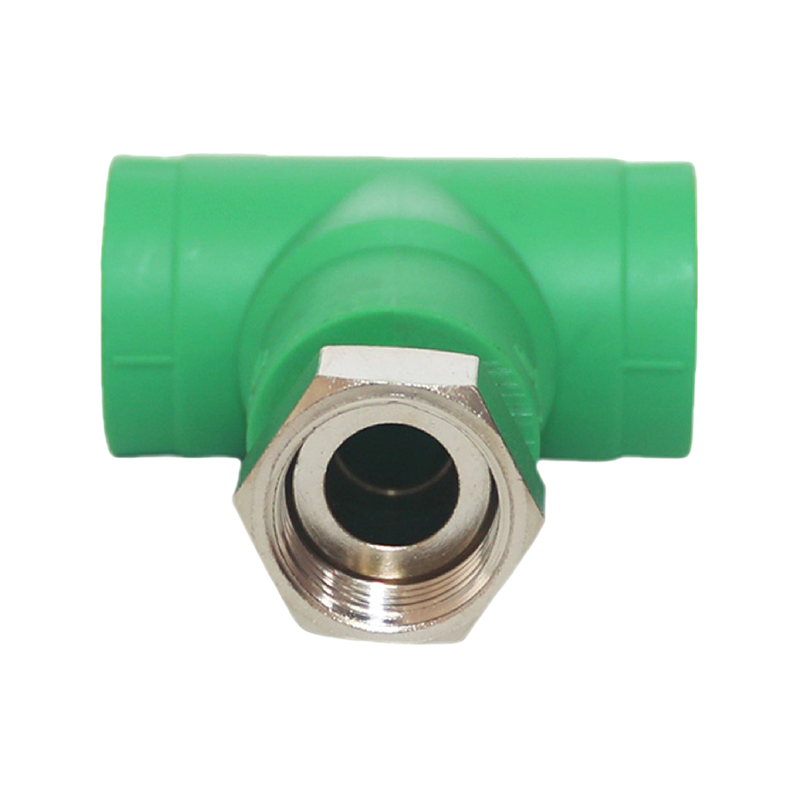
Our hot-melt PPR tee collection illustrates how modern polymer fittings combine corrosion immunity with a one-step welding process that removes the need for threading or glue.
Connection Methods: Which One Is Right for Your Project?
How you join a tee to the pipe determines both installation speed and long-term leak risk. The four dominant methods each favor a different job profile—from a weekend DIY repair to a 200-unit apartment rough-in. The decision matrix below weighs tool investment, reusability, and real-world failure rates.
| Method | Typical Tools | Joint Assembly Time | Reusability | Estimated Leak Rate |
|---|---|---|---|---|
| Hot-melt (PPR) | Socket fusion heater | 30 sec heat + 10 sec hold | Permanent | <0.3% when fused correctly |
| Compression | Adjustable wrenches | 2–4 min | Reusable | 0.8–1.2% (depends on insert/tightening) |
| Push-to-connect | None (hand insertion) | <30 sec | Reusable with release tool | 0.5–1.0% |
| Solder (copper) | Torch, flux, solder | 3–6 min | Not reusable | 1.2–2.0% (propress reduces this) |
Push-to-connect tees have revolutionized quick fixes, but their internal O-rings age faster in chlorinated water. Soldered joints demand skill with an open flame and leave a heat-affected zone that can weaken nearby seals. Hot-melt fusion, used with PPR, creates a homogeneous bond: the pipe and fitting become one piece. There is no gasket to replace and no gap for biofilm to colonize. The trade-off is that you cannot disassemble the joint later—you cut it out.
Step-by-Step Installation Guide for PPR Tee Fittings
A properly fused PPR tee will outlast the building. The process takes less than two minutes per joint, but rushing any step invites a slow, hidden leak behind a finished wall. Follow this sequence strictly, especially the depth marking and cooling phases.
- Cut the pipe square using a PPR shear—never a hacksaw—to avoid micro-cracks that propagate under pressure.
- Remove any burr or lip with the built-in scraper; even fine debris can prevent full penetration into the socket.
- Mark the insertion depth on the pipe using the tee socket as a gauge. For a 3/4″ tee, typical depth is 14–16 mm.
- Heat the fusion tool to exactly 260°C (500°F). Push the pipe and the tee socket onto their respective heating mandrels simultaneously.
- After the manufacturer’s heating time (5–7 seconds for 3/4″), remove both and immediately insert the pipe into the tee socket in one straight motion—no twisting.
- Hold the joint steady for 10 seconds, then let it cool undisturbed for at least 2 minutes before applying any pressure or stress.
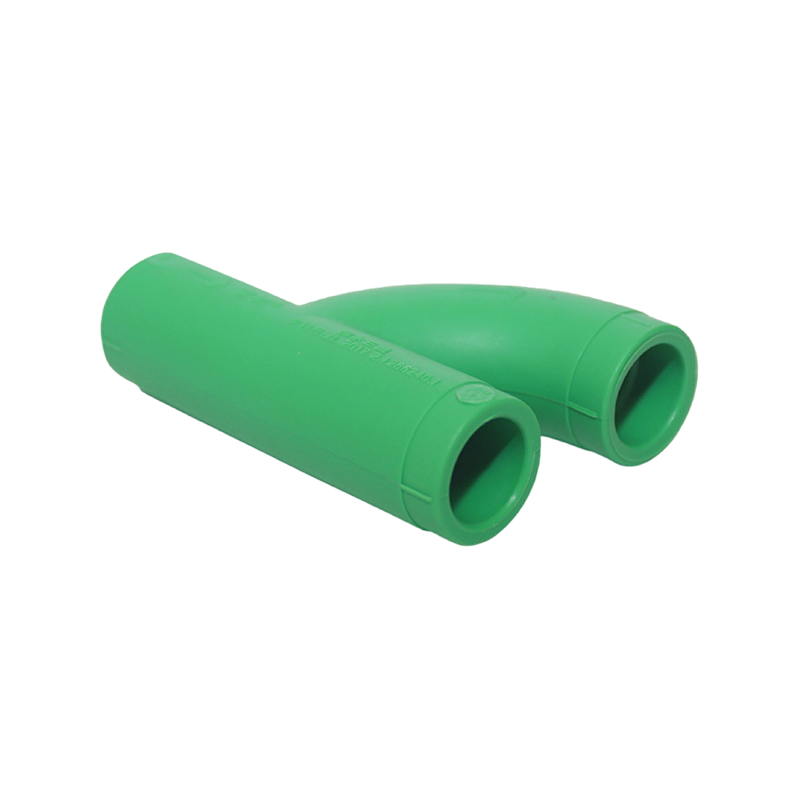
When installing a PPR downstream tee connector that directs flow toward a fixture, double-check the direction arrow on the fitting body. Reversing it can starve a branch of hot water or cause hammer when a valve closes quickly.
Common Installation Mistakes and How to Fix Them
Even experienced plumbers see callbacks from tee joints. Most failures trace back to five avoidable errors. Recognizing them before drywall goes up saves thousands in mold remediation and pipe replacement.
- Overheating the PPR socket. When the fusion temperature exceeds 270°C, the polymer carbonizes. The joint looks fused but develops micro-leaks within months. Cure: discard the fitting and cut back the damaged pipe—never try to re-fuse a burnt end.
- Skipping the insertion-depth mark. If the pipe bottoms out unevenly, it can partially block the branch opening, causing permanent flow restriction. Cure: always mark with a pencil; a 1 mm gap from the stop face is acceptable.
- Using PVC cement on a pressure line without priming. The solvent weld requires a chemical primer to soften the surface. Without it, the bond remains superficial and splits under water hammer. Cure: re-cut the joint and follow the full prime-cement sequence.
- Tightening compression nuts with a pipe wrench. Over-compression deforms the olive and cuts into the pipe, creating a future shear point. Cure: use two smooth-jaw adjustable wrenches and stop when the nut seats firmly—typically 1/2 to 3/4 turn past hand-tight.
- Installing a brass tee directly into galvanized steel without a dielectric union. Galvanic corrosion eats away the steel threads within two years. Cure: always insert a dielectric nipple or union to break the electrical path.
Cost Analysis: DIY vs. Professional vs. Bulk Purchase
A $0.80 PPR tee costs far more to install poorly than to source wisely. The true cost includes tools, labor, and the price of future maintenance. The numbers below reflect typical North American pricing for a single-family home repipe with 20–30 tee fittings.
| Approach | Fitting Material Cost | Tool/Consumable Cost | Labor (if hired) | 10-Year Maintenance Estimate |
|---|---|---|---|---|
| DIY with PPR tees (hot-melt) | $18–45 | $80–120 (fusion tool rental or purchase) | $0 | $0–20 (possible o-ring in shutoffs) |
| DIY with brass compression tees | $90–240 | $15 (wrenches) | $0 | $50–150 (tightening, olive replacement) |
| Professional plumber (PPR or copper) | Included in quote | Included | $800–1,500 | $0–80 (warranty covers most leaks) |
| Bulk wholesale (PPR, 1,000+ units) | $0.35–0.90 per tee | Amortized across jobs | Varies | $0 |
Bulk purchasing slashes the unit price of PPR tees by 40–60% compared to retail blister packs. Contractors who standardize on one PPR system often recoup their fusion tool investment within the first two projects. The absence of consumable gaskets and thread sealant further compresses the long-term total cost of ownership. For a 30-unit apartment complex, the material savings alone can exceed $1,200 when shifting from brass to PPR tees.
How to Choose a Reliable Tee Fitting Supplier
A supplier’s catalog may look identical to the next, but four indicators separate commodity resellers from partners who can protect your project deadline and liability.
- Certifications. Look for NSF/ANSI 61 or NSF/ANSI 372 for drinking water safety, ASTM F2389 for PPR materials, and ISO 15874 for dimensional consistency. A supplier that publishes full test reports—not just logos—gives you audit-ready documentation.
- Production scale. A manufacturer running over 100 production lines with an annual output exceeding 100,000 tons can absorb raw-material price swings and guarantee on-time delivery, even for customized reducing tees.
- Export track record. Tee fittings that have been installed in extreme environments—from Arctic research stations to desert hospitals—prove their resilience beyond laboratory certificates.
- Customer transparency. Request a factory video walkthrough, a sample lot for destructive testing, and references from a project similar to yours. A supplier that hesitates on any of these is likely hiding batch inconsistency.
The same selection criteria apply whether you are ordering 100 tees for a single-family renovation or 50,000 for a municipal water upgrade. Verifying material traceability and fusion compatibility in advance avoids the most expensive mistake in plumbing: replacing an entire system because the fittings and pipes came from incompatible polymer batches.
Our Product //
Recommend Products
 +86-13801995968
 +86-18017886575
 No. 366, Lane 6995, Puxing Road, Fengxian District, Shanghai
Copyright © SHANGHAI PILSA PIPE INDUSTRY CO., LTD. All rights reserved.

