

 en
 English
 русский
 Español
 عربى



HDPE Sanitary Sewer Pipe: Specifications, Joints, Standards and Buying Guide
Industry News-Content
- 1 What Is HDPE Sanitary Sewer Pipe?
- 2 Why HDPE Is the Default Choice for Modern Sanitary Sewers
- 3 Gravity Sewers and Force Mains Are Not the Same Design Problem
- 4 The Standards and Documents to Ask For
- 5 Jointing, Bending and Bedding in the Field
- 6 Matching Pipe Size to the Job
- 7 Where Suban Fits in a Sanitary Drainage Package
- 8 A Practical Buyer's Checklist
Specifying HDPE sanitary sewer pipe is one of those decisions that looks simple on a drawing and gets complicated in the trench. The pipe has to carry wastewater that never stops, resist gases that destroy ordinary materials, and stay leak-free several metres down, where a repair costs far more than the original purchase. HDPE handles that brief better than almost any competing material, but only when the resin grade, the dimension ratio, the joints and the installation details are chosen correctly.
We have manufactured pipe and fittings for drainage and water supply since 2003, and the questions that decide whether a sewer line serves for fifty years or fails in five are almost always the same ones. Here is what we walk through with buyers and contractors before they place an order.
What Is HDPE Sanitary Sewer Pipe?
The term covers several related products. They all use high-density polyethylene resin, but they differ in wall structure, dimension ratio and duty.
- Solid-wall HDPE pipe. Extruded to controlled dimensions, it serves both pressure and gravity duties, including sanitary force mains and deep gravity mains.
- Profile-wall and double-wall corrugated HDPE pipe. A smooth bore with a corrugated outer wall, used mainly for gravity sanitary sewers, storm connections and laterals.
- Coiled small-diameter HDPE pipe. From roughly 1 in. to 4 in., delivered in long coils for laterals, house connections and relining work.
Most sanitary sewer specifications call for PE100 or PE4710 resin with a cell classification such as 445574C under ASTM D3350. Reputable pipe is permanently marked with size, dimension ratio (DR), resin class and the standard it was produced to, which makes verification on site straightforward and keeps everyone honest.
Why HDPE Is the Default Choice for Modern Sanitary Sewers
The advantages are practical rather than theoretical, and they show up on the schedule as much as in the ground.
- Fused joints create a continuous pipeline, so groundwater cannot enter and sewage cannot escape. That single property removes most infiltration and inflow problems.
- HDPE is immune to the sulfuric acid that forms when hydrogen sulfide meets condensation in the headspace of a sewer.
- The smooth bore keeps friction low, so gravity lines can often be laid at gentler slopes than with rougher materials, which matters when the receiving invert is already fixed.
- Roots cannot work their way into a properly fused joint.
- The material's flexibility absorbs settlement, ground movement and seismic events without cracking.
- It is light enough to handle without heavy lifting gear, and ductile enough for trenchless methods such as directional drilling, sliplining and pipe bursting.
- Expected service life is commonly stated at 50 to 100 years, which is where the lifecycle cost argument comes from.
Gravity Sewers and Force Mains Are Not the Same Design Problem
The most common mistake we see is a specification that treats every HDPE line identically. A gravity sewer and a pump discharge behave differently, and the pipe they need is not the same pipe.
| Design point | Gravity sanitary sewer | Sanitary force main |
|---|---|---|
| Primary load | Earth cover and traffic loading | Internal pressure plus surge |
| Typical dimension ratio | DR 21 to DR 35 | DR 11 to DR 17 |
| Wall construction | Solid wall or double-wall corrugated | Solid wall only |
| Jointing | Butt fusion or electrofusion; gasketed joints on some profile pipe | Butt fusion or electrofusion, flanged at pump stations and valves |
| Governing checks | Deflection, slope, minimum cover, flotation | Pressure rating, surge allowance, thrust restraint |
| Documents to request | Dimensional and ring stiffness test reports | Hydrostatic test and resin certificates |
If your line is a force main, the wall thickness has to be selected against working pressure and surge, not against the cheapest DR available. If it is a gravity line, deflection control during backfill will decide the long-term performance far more than the resin grade.
The Standards and Documents to Ask For
Standards give you a common language with your supplier, and they make disputes much easier to settle. For solid-wall pressure pipe, the usual references are ASTM D3350 for cell classification, ASTM F714 and AWWA C906 for dimensioning, and ISO 4427 or EN 12201 for international projects. Gravity corrugated pipe is typically specified to ASTM F2306, ASTM F2648, AASHTO M252 or M294, and EN 12666.
Whichever set applies to your job, the paperwork should travel with the pipe: the resin supplier's certificate, a cell classification report, dimensional and ovality measurements, hydrostatic or ring stiffness results, and any third-party inspection you have agreed. When you are comparing how the major systems line up, our overview of polyethylene pipe standards under ASTM, AWWA and ISO is a useful reference to keep beside the specification.
Jointing, Bending and Bedding in the Field
Butt fusion is the backbone of any HDPE sewer installation. The sequence is short but unforgiving: cut square and clean, clamp and align, face the ends, check the gap, heat to the specified temperature and time, join under the correct pressure, then let the joint cool undisturbed. Electrofusion is the practical choice for tie-ins, repairs and tight access pits. Every fusion should be logged with machine data and operator reference, because that record is what protects you if a joint is ever questioned.
HDPE can also be curved on site, which saves fittings and improves flow through long radius alignments. The allowable radius depends on the dimension ratio and wall thickness: thicker walls tolerate tighter bends, while large-diameter thin-wall pipe needs a generous radius. Our note on the bending radius rules and DR limits for HDPE explains how to check the limit before you decide to bend rather than fit an elbow.
Bedding matters just as much. Flexible pipe works as a soil-pipe system, so the backfill is part of the structure: select granular material, placed and compacted in lifts around and above the pipe, with deflection checked after backfill. A common acceptance limit for sanitary sewer is 5 percent deflection, measured rather than assumed.
Matching Pipe Size to the Job
Size labels differ between systems. Inch-based sizes are usually named after the iron pipe size they replace, while metric sizes are named by outside diameter, so always confirm which convention your drawing uses before ordering.
| Size range (outside diameter) | Typical sanitary sewer role | Common wall construction |
|---|---|---|
| 1 in. to 3 in. | Building laterals, house connections, pressure sewer service lines | Solid wall, coiled |
| 4 in. to 8 in. | Building connections, small collector mains, pump discharge lines | Solid wall or double-wall |
| 10 in. to 15 in. | Neighborhood collector mains and pump station discharge headers | Solid wall or profile wall |
| 18 in. to 24 in. | Municipal trunk sewers and interceptors | Solid wall or profile wall |
| 30 in. and above | Large interceptors, outfalls and river crossings | Solid wall or profile wall |
Hydraulic capacity should always be confirmed against the design flow and the minimum self-cleansing velocity, especially on the flatter grades where solids are most likely to settle.
Where Suban Fits in a Sanitary Drainage Package
We are a manufacturer rather than a trading desk. Suban Pipe, operated by Shanghai Pilsa Pipe Industry Co., Ltd., has produced pipe and fittings at our Shanghai and Zhoukou plants since 2003, and we export to more than 20 countries. Our range covers HDPE drainage pipe and double-wall corrugated pipe for buried sewers, along with the fittings and accessories that complete a building's drainage, water supply and heating systems.
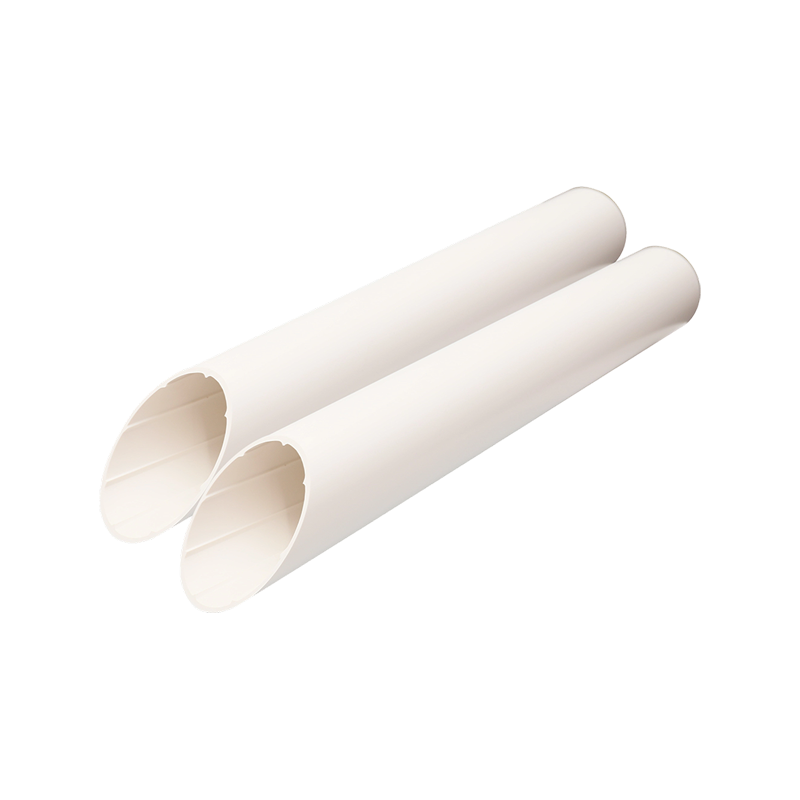 PVC Drainage Spiral PipePVC Drainage Spiral Pipe is a high-quality pipe product specifically designed for efficient drainage, catering to applications that require pressure resistance and cor...View Product →
A sanitary sewer does not stop at the property line. Inside the building, the vertical stack has to deal with noise as well as flow, which is why many of our clients pair buried HDPE with our PVC-U spiral drainage pipe for the above-ground stack.
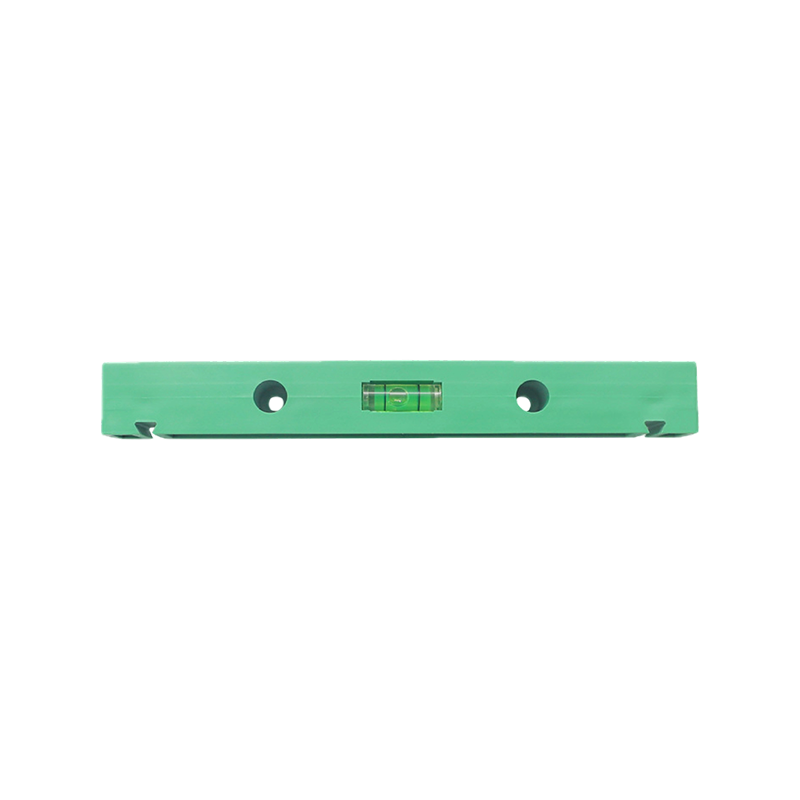
 PVC Same-Floor CollectorThe PVC Same-Floor Collector is a highly efficient drainage accessory specifically designed for modern building drainage systems. It is primarily used to address the c...View Product →
Projects that use same-floor drainage layouts can bring their branch connections together with a same-floor collector before the flow drops to the main, which keeps ceiling space clear and simplifies future maintenance.
The rest of the package comes from the same production base: PVC-U drainage pipe and fittings, PPR hot and cold water systems, PE-RT underfloor heating pipe with manifolds, and the electrical conduit that runs alongside them. Ordering one system from one source keeps tolerances, delivery schedules and documentation consistent.
A Practical Buyer's Checklist
- Confirm the duty: gravity, force main or a combination, and note the design pressure and surge allowance.
- Fix the dimension ratio against that pressure, not against the cheapest wall available.
- Ask for the resin cell classification and the standard the pipe is produced to.
- Check that the marking repeats along the pipe and matches the certificates.
- Verify the jointing method, the welders' qualifications and that fusion data will be recorded.
- Confirm dimensional tolerances, ovality, and the length or coil options your transport can accept.
- Agree the bedding specification, deflection limit and testing requirements before delivery.
- Include accessories in the order: gaskets, flanges, water stop collars, repair couplings, lubricant.
- Store pipe away from prolonged direct sunlight and protect the ends until installation.
Every sewer project has at least one detail that only appears once the trench is open, whether that is unexpected groundwater, a rock layer, or an existing connection sitting at an awkward depth. Send us your drawings and design flow, and we will come back with a material recommendation, sizes, jointing method and a quotation you can compare line by line. Get in touch with our team and let us get the specification right before the first length is fused.
Our Product //
Recommend Products

 +86-13801995968
 +86-18017886575

 No. 366, Lane 6995, Puxing Road, Fengxian District, Shanghai
Copyright © SHANGHAI PILSA PIPE INDUSTRY CO., LTD. All rights reserved.

