

 en
 English
 русский
 Español
 عربى



PVC French Drain Pipe: Why Solid PVC Beats Corrugated for Drainage Runs
Industry News-Content
- 1 What a French Drain Pipe Actually Has to Do
- 2 PVC vs Corrugated Pipe for a French Drain
- 3 Why Solid PVC Usually Wins on Clogs and Longevity
- 4 Where Corrugated Pipe Still Makes Sense
- 5 When a PVC French Drain Fails Anyway
- 6 Sizing a PVC French Drain Pipe
- 7 Fittings, Joints and Direction Changes
- 8 Slope, Bedding and Cleanouts
- 9 Buying PVC Drain Pipe from the Manufacturer
- 10 Quick Answers for Buyers and Installers
A French drain is one of those projects where the cheapest component decides how long the whole system lasts. Gravel, filter fabric and slope all matter, but the pipe is what has to stay open year after year under soil, roots and traffic loads. That is why the debate over french drain pipe pvc versus corrugated HDPE keeps returning to contractor forums and job-site conversations: one option is rigid, smooth-walled and jointed, the other is flexible, cheap and quick to lay. We have been extruding PVC pipe and fittings since 2003, and this is one of the questions overseas buyers and installers ask us most often. Here is how the two materials compare, and how to specify a PVC line that still flows after fifteen winters in the ground.
What a French Drain Pipe Actually Has to Do
A French drain is a gravel-filled trench that intercepts groundwater or surface water and carries it away from a foundation, retaining wall, driveway or soggy lawn. The pipe sits inside that gravel envelope, usually wrapped in filter fabric, and slopes toward a discharge point lower than the collection zone.
Once it is buried, the pipe has four jobs, and every material argument comes back to them:
- Accept water along its full length through perforations or slots;
- Carry that water with as little friction as possible;
- Resist the weight of soil, gravel and occasional vehicle loading without deforming;
- Stay open for decades, because no one is going to dig it up for routine cleaning.
Clog resistance, crush strength, hydraulic smoothness and service life are the criteria that matter. Cost and installation speed come after them.
PVC vs Corrugated Pipe for a French Drain
Both materials are sold as "drain pipe", which is where most of the confusion starts. Solid-wall PVC is a rigid pipe joined with solvent-weld couplings; corrugated HDPE is a ribbed, flexible pipe that bends by hand and snaps together.
| Criterion | Solid-Wall PVC | Corrugated HDPE |
|---|---|---|
| Interior surface | Smooth, uniform bore | Ribbed; silt settles in every corrugation |
| Clog resistance | High; debris keeps moving | Lower; ridges trap fines and root hairs |
| Crush resistance | Rigid wall carries its own ring stiffness | Flexible; depends on careful backfill |
| Joints | Solvent-weld couplings, watertight | Snap-on or friction joints; soil can enter as the trench settles |
| Installation speed | Slower; needs fittings, glue and alignment | Fast; bends around obstacles without fittings |
| Handling | Rigid lengths; needs a straight trench | Coils; suits tight yards and small crews |
| Upfront cost | Higher material cost | Lower |
| Typical service life | Decades when bedded correctly | Often ten to twenty years, and it can flatten |
| Best use case | Long runs, fine soils, under driveways, expensive repairs | Short drains, light loads, DIY and temporary relief |
Why Solid PVC Usually Wins on Clogs and Longevity
The smooth bore is the whole argument. Water crossing a corrugated pipe meets a ridge every few centimetres, and each ridge is a place where fine sand, silt and root hairs slow down and settle. A corrugated line that flows well in year one can be half filled with sediment by year ten, and once a ribbed pipe silts up there is no practical way to clean it without pulling it out of the ground.
Rigid PVC has none of those ledges. Silt that reaches the pipe keeps moving on the slope you gave it, and a contractor can jet or flush a PVC line through a cleanout if the system ever slows down. Watertight solvent-weld joints add a second advantage: soil cannot enter the run as the trench settles, which is a common failure point on flexible systems where a shifted joint opens a path for surrounding ground.
Where Corrugated Pipe Still Makes Sense
None of this makes corrugated pipe useless. It is the right choice for a shallow downspout extension, a short backyard drain in a light-traffic area, a temporary fix while a permanent plan is designed, or any run that has to snake around tree roots and buried utilities on a tight budget. If you take that route, use a socked perforated pipe, keep the run short, and accept that replacement may become part of the maintenance schedule.
When a PVC French Drain Fails Anyway
Field reports of PVC drains clogging within a couple of years usually point at installation rather than material. Perforations pressed directly against compacted stone or native clay, filter fabric pushed into the openings, an almost flat trench, or a gravel envelope full of fines will defeat rigid pipe just as quickly as flexible pipe.
Keep the openings clear. Bed the pipe on washed, single-size gravel, keep the perforations on the lower half of the pipe so rising groundwater can enter, wrap the gravel envelope in filter fabric with the sheets overlapped, and hold the design slope across the entire run. A drain that is specified well and installed badly is still a failed drain.
Sizing a PVC French Drain Pipe
For residential work, four-inch pipe is the default: it carries the flow from a typical foundation drain with room to spare and stays easy to hold on grade. Three-inch pipe suits short footing drains and tight yards, while six-inch belongs on long runs, commercial sites and trenches that also collect roof discharge or surface water.
Perforation style matters as much as diameter. Solid-wall PVC gravity pipe is commonly specified to ASTM D2729, coextruded cellular-core perforated pipe to ASTM F891, and heavier Schedule 40 sewer pipe to ASTM D3034 where a line may also carry waste. Look for cleanly cut or drilled openings with no burrs and consistent spacing: ragged slots are the fastest way to lose a drain.
Remember that only the collection portion of the run needs openings. The discharge leg that carries water to daylight, a storm structure or a dry well should be solid, non-perforated pipe, sized to match the collection line so the flow never backs up at the transition.
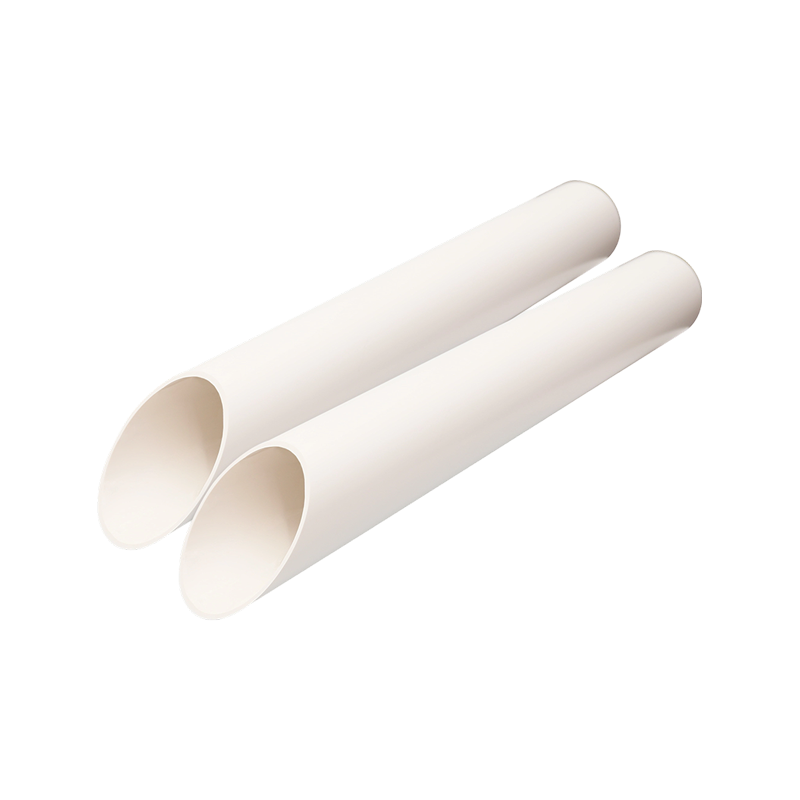 PVC Standard Drain-PipePVC Standard Drain-Pipe is engineered for high performance in a variety of drainage systems, with a wide selection of pipe sizes and wall thicknesses. Available in dia...View Product →
Fittings, Joints and Direction Changes
Every change of direction is a place where a drain loses velocity and drops part of its load of fines. Two 45-degree elbows flow better than one 90-degree fitting, and a wye branch is gentler than a tee when a second collection line joins the run. Solvent-weld couplings give a watertight joint that soil cannot enter, which is exactly what a buried line needs; push-fit connections on flexible pipe can pull apart as the trench settles.
Plan the fittings before you dig: couplings for every pipe length, 45s at bends, wyes at junctions, reducers at diameter changes, caps at dead ends and a flush point at the head of the line. Ordering pipe and fittings together from one manufacturer avoids the diameter and wall-thickness mismatches that turn into weeping joints two seasons later.
 PVC Straight CouplingPVC Straight Coupling offering exceptional performance and reliability. Crafted from high-quality PVC material, this product ensures long-term stability under various ...View Product →
Slope, Bedding and Cleanouts
Slope is the difference between a drain and a long, buried puddle. A widely used field rule is a minimum of 1/8 inch per foot for four-inch pipe, roughly one percent, and 1/4 inch per foot where the soil is fine or the run is long. Flatter than that, and silt settles out. Bed the pipe on a level gravel layer so every joint is supported, keep stone from jamming into the openings, and backfill with native soil without compacting directly over the pipe.
Then give the system a way to be serviced. Bring a cleanout riser to grade at the upstream end of the run and at each significant bend, and use a fitting with a cleanout opening at the bend so a contractor can flush the line with a hose or a jetter instead of digging it up. It is the cheapest insurance a drain can have.
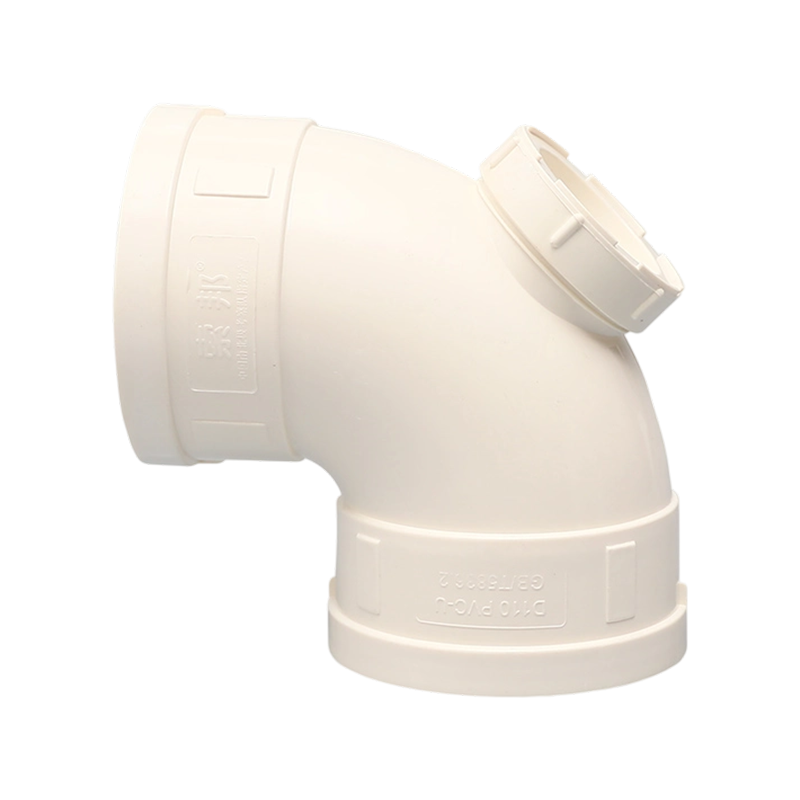 90°PVC Elbow with CleanoutThe 90°PVC Elbow with Cleanout is specifically designed for drainage systems, offering exceptional durability and efficiency. The unique 90° bend allows for flexible a...View Product →
Buying PVC Drain Pipe from the Manufacturer
Suban is the export brand of Shanghai Pilsa Pipe Industry Co., Ltd., a pipe manufacturer founded in 2003 with production in Shanghai and Zhoukou and a range that covers PVC-U drainage pipe, drainage fittings, PPR water supply systems, PE-RT underfloor heating pipe and PVC electrical conduit. Our published annual capacity is around 100,000 tons, we ship to more than twenty countries, and our quality file includes CE certification. For a buyer assembling a drainage package, that means pipe and fittings in matching dimensions from one source, in one shipment, with one set of documents.
If you would like a wider look at how PVC grades differ between sewer, drain and pressure service, our team wrote a plain-language guide to the types of PVC pipe used for sewer lines. It pairs well with this article when you are drawing up a specification for a contractor or a distributor.
Quick Answers for Buyers and Installers
Is PVC or corrugated pipe better for a French drain?
For anything permanent, PVC. Solid-wall pipe keeps its bore, resists crushing and can be cleaned. Corrugated pipe is cheaper and faster to install, but it tends to silt up and flatten over time.
What size PVC pipe does a French drain need?
Four-inch is the standard for residential foundation and yard drains. Use three-inch for short footing drains, and six-inch for long runs, commercial sites or trenches that also take roof water.
Should the perforations face up or down?
For groundwater collection the openings generally sit on the lower half of the pipe so water rising in the gravel can enter. Follow the project engineer's drawing; what matters most is that no stone or soil seals the openings.
Choosing a french drain pipe pvc is rarely the most exciting line in a project budget, but it is the one that decides whether the trench you dig this season is still doing its job a decade from now. Smooth bore, rigid wall, watertight joints, correct slope and cleanable access: get those five things right and the drain looks after itself. If you would rather not assemble that specification from scratch, send us your drawings and quantities, because matching pipe and fittings from a single manufacturer is what our plant does every working day.
Our Product //
Recommend Products


 +86-13801995968
 +86-18017886575

 No. 366, Lane 6995, Puxing Road, Fengxian District, Shanghai
Copyright © SHANGHAI PILSA PIPE INDUSTRY CO., LTD. All rights reserved.

