

 en
 English
 русский
 Español
 عربى



HDPE DR 11 Pipe Explained: Pressure Rating, Wall Thickness & Selection
Industry News-Content
HDPE DR 11 shows up on more buried pipe drawings than almost any other polyethylene specification. It is the ratio engineers reach for when a water main has to hold 200 psi, the one contractors pick when a line will be pulled through a directional bore, and the one that quietly became the default for ground source heat pump loops. Yet DR 11 is not automatically the right answer for every project, and the gap between DR 11 and its neighbours DR 9, DR 13.5 and DR 17 is worth understanding before a purchase order is signed.
This guide walks through what DR 11 means, how thick the wall really is in common sizes, which pressure class applies under which standard, where the ratio earns its place, and what to check on a quote before you buy.
What "DR" Means in HDPE DR 11
DR stands for dimension ratio, and the arithmetic is simple. Divide the outside diameter of the pipe by its minimum wall thickness and you have the DR. A DR 11 pipe therefore has a wall that is exactly one eleventh of its outside diameter. A 4 inch IPS pipe with a 4.500 inch outside diameter gets a nominal wall of 0.409 inch, while a 12 inch pipe with a 12.750 inch outside diameter gets a wall of 1.159 inch. Same ratio, same pressure capability, very different weight on the truck.
Because the ratio governs the hoop stress carried by the wall, DR — not diameter — is what sets the pressure capability of a polyethylene line. The numbers run in the opposite direction to strength: the smaller the DR, the thicker the wall and the higher the rating. DR 11 sits in the mid-to-heavy range. DR 17 and DR 21 are thinner, lighter and cheaper; DR 9 and DR 7.3 are thicker and are reserved for high pressure service or unusually rough installation conditions.
In ISO and most metric markets the same figure is called SDR, or standard dimension ratio, and the two terms are used interchangeably for polyethylene pipe. A PE100 pipe with SDR 11 is rated PN 16, meaning a nominal 16 bar working pressure. A DN 110 mm PE100 SDR 11 pipe has a 10 mm wall, and a DN 315 mm pipe has a 28.6 mm wall. Once you know the DR and the resin grade, you know the rating without opening a catalogue.
HDPE DR 11 Pressure Rating and the Standards Behind It
The pressure class of a DR 11 pipe depends on the resin grade, not the geometry. The most common cases are:
- PE4710 (PE100 class, 1,600 psi hydrostatic design basis): DR 11 rated at 200 psi, about 13.8 bar, under AWWA C906.
- PE3608 or PE3408 (1,250 psi hydrostatic design basis): DR 11 rated at 160 psi, about 11 bar.
- ISO 4427 PE100: SDR 11 rated at PN 16.
Those figures assume a reference temperature of 73 °F (23 °C) with water as the medium. Higher sustained temperatures reduce the allowable working pressure, which is one reason polyethylene is seldom chosen for hot water service. Surge and cyclic loading are handled separately in design, and most water specifications allow the sum of working pressure and surge to approach 1.5 times the pressure class, a point worth confirming with the line's surge analysis.
The documents you will see referenced on a submittal include ASTM F714 for polyethylene pipe sized by outside diameter and DR, AWWA C906 for water distribution, AWWA C901 for smaller diameter water service, ISO 4427 for metric PE100 systems, and ASTM D3350 for the cell classification of the resin itself. Potable water projects in North America also need certification to NSF/ANSI 61 or an equivalent local approval. If you want a deeper walk-through of how these standards interact, our overview of polyethylene pipe standards for buyers is a useful companion to this page. The lesson is simple: the same DR 11 label can mean 160 psi or 200 psi depending on which resin and which standard the supplier is working to.
HDPE DR 11 Wall Thickness in Common Sizes
The table below converts the ratio into numbers for the IPS sizes that appear most often on drawings. Minimum wall is the outside diameter divided by 11, and the inside diameter is what remains after two walls are subtracted — that inside figure is what drives your flow calculation.
| Nominal size (IPS) | Outside diameter (in) | Minimum wall (in) | Approx. inside diameter (in) | Pressure class (psi) |
|---|---|---|---|---|
| 1" | 1.315 | 0.120 | 1.075 | 200 |
| 2" | 2.375 | 0.216 | 1.943 | 200 |
| 3" | 3.500 | 0.318 | 2.864 | 200 |
| 4" | 4.500 | 0.409 | 3.682 | 200 |
| 6" | 6.625 | 0.602 | 5.421 | 200 |
| 8" | 8.625 | 0.784 | 7.057 | 200 |
| 10" | 10.750 | 0.977 | 8.796 | 200 |
| 12" | 12.750 | 1.159 | 10.432 | 200 |
Two details are worth noticing. First, the wall grows almost linearly with size, so a DR 11 line in large diameters is a genuinely heavy pipe that needs handling equipment and a sensible trench plan. Second, the pressure class stays constant down the whole column — the practical beauty of the DR system.
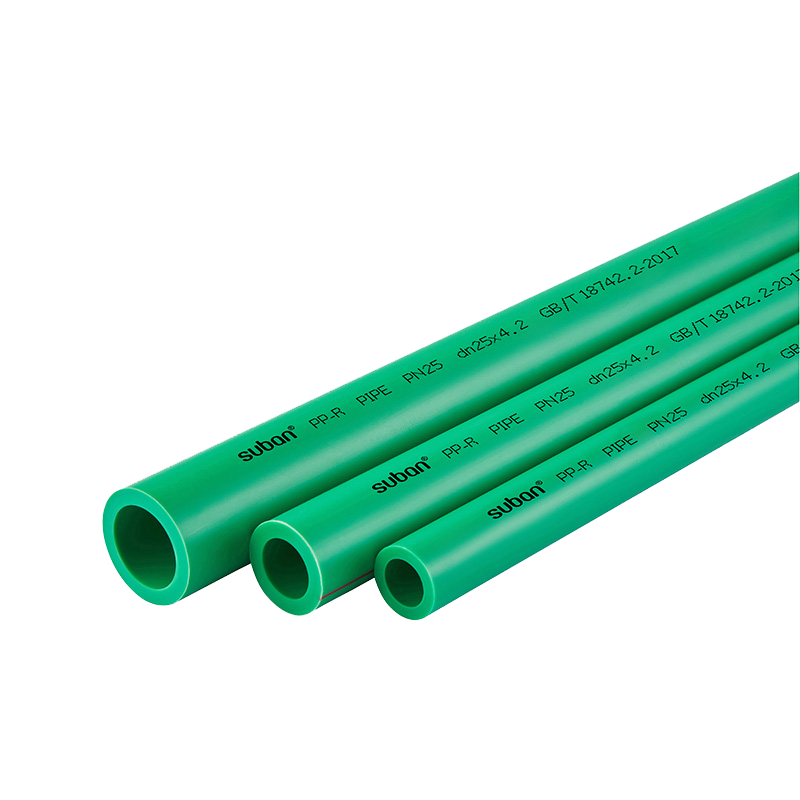
The same ratio language runs through the rest of a building's pressure piping. PP-R water supply pipe, for example, is graded the same way: PN 20 corresponds to SDR 6, PN 16 to SDR 7.4, and PN 10 to SDR 11. Understanding DR on a buried main therefore helps you read the specifications on the hot and cold water side too.
 Three Layer PPR Pipe(1)High Temperature Resistance: the maximum sustained working temperature is up to 70 degrees Celsius, and the maximum transient temperature is up to 95 degrees Celsius.View Product →
Where HDPE DR 11 Is the Right Choice
DR 11 has earned its reputation in applications where pressure, installation stress and long service life all matter at once:
- Municipal potable water mains and distribution lines, where a 200 psi rating pairs with a fully fused, leak-free system.
- Sewer force mains and pump discharge lines, where repeated surge needs extra wall thickness.
- Horizontal directional drilling, river crossings and road bores, where the pipe is pulled under tension and abraded against soil.
- Ground source heat pump loops, where DR 11 has been a borehole default for years.
- Gas distribution mains and services, industrial process lines, mining slurry and tailings, and landfill leachate collection.
- Irrigation mains and temporary bypass lines that are assembled, used and recovered.
Heat pump systems are a good illustration of how a whole project fits together. The buried loop is usually DR 11 because the wall tolerates installation stress and the fusion joints keep the circuit sealed for decades. Once the pipe enters the building, the hydronic side often switches material: PE-RT underfloor heating pipe is the standard choice for the slab, since it bends easily into tight loop patterns, tolerates the temperatures of a heating circuit and keeps joints to a minimum.
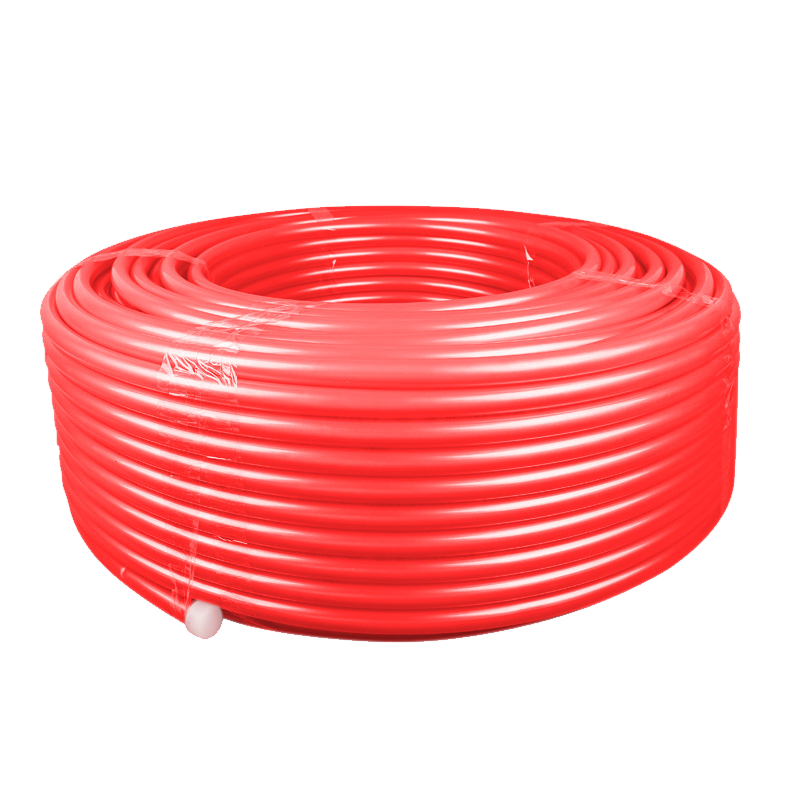 PE-RT Red Single-Layer Radiant Floor Heating PipePurple PE-RT underfloor heating pipe (single layer)View Product →
DR 11 Compared with DR 9, 13.5, 17 and 21
Choosing a dimension ratio is a balancing act between pressure capability and material volume. The table below compares the common options at the same outside diameter.
| Dimension ratio | Pressure class (psi) | Relative resin use | Typical applications |
|---|---|---|---|
| DR 9 | 250 | 1.20 | High pressure mains, demanding bores, industrial lines |
| DR 11 | 200 | 1.00 | Water mains, force mains, geothermal loops, directional drilling |
| DR 13.5 | 160 | 0.83 | Medium pressure distribution and irrigation mains |
| DR 17 | 125 | 0.67 | Long distribution mains and low head lines |
| DR 21 | 100 | 0.55 | Low pressure and cost-driven installations |
The trade-offs are straightforward. Stepping down from DR 17 to DR 11 buys you 75 psi of pressure class, a wall that shrugs off rocky backfill and surge events, and the tensile strength a long directional pull demands. The costs are roughly 50 percent more resin per metre, about 15 to 20 percent less flow capacity at the same head loss because the inside diameter is smaller for a given outside diameter, a stiffer pipe with a larger minimum bend radius, and more weight to move and bury.
Field Notes: Bending, Fusion and Surge
Once the DR is fixed, a few practical rules keep a DR 11 installation out of trouble.
- Butt fusion is the standard joint for DR 11 in sizes above roughly 2 inches, with electrofusion for tie-ins and confined spaces, and mechanical fittings where the line meets valves, hydrants or pumps.
- Minimum cold bend radius is commonly quoted as 20 to 25 times the outside diameter, and the multiplier depends on the DR, the wall thickness and the ambient temperature. Cold weather and heavy walls both push you toward the larger figure.
- Polyethylene expands and contracts about 1.2 × 10⁻⁴ per °C. Because fusion joins the whole line into one continuous length, buried DR 11 is largely self-restrained, and transitions to other materials are where restraint and anchoring deserve real attention.
- Surge is the quiet killer of pressure lines. Keep the sum of working pressure and surge within the allowance your specification permits, and check pump start-up and valve closure behaviour before commissioning.
- Bedding, cover depth, trace wire and marking tape are cheap insurance. A DR 11 wall resists point loading well, but it cannot compensate for a trench full of sharp rock.
A Practical Buying Checklist for DR 11 Pipe
When you compare quotations, the price per metre tells only part of the story. Ask for these details in writing:
- The resin grade and cell classification to ASTM D3350, since PE4710 and PE3608 deliver different ratings at the same DR.
- The manufacturing standard and the wall thickness tolerance the supplier works to.
- Independent dimensional and hydrostatic test reports, not just a certificate of conformity.
- Potable water certification where the line carries drinking water.
- Permanent marking on the pipe: size, DR, resin class, standard, manufacturer and production date.
- Coil or straight length format, and whether the delivery lengths suit your fusion and trenching plan.
- Fusion equipment, operator qualification and joint records for the inspector.
- Lead time, packing and container loading if the order is an export shipment.
DR 11 is rarely chosen by accident. It is the ratio that balances a 200 psi rating against a wall heavy enough to survive a bore, a pull or a rocky trench, and it remains the reference point for most polyethylene water and geothermal work. Start with the DR, confirm the resin grade behind the pressure class, and check the wall in the sizes you actually need — bedding, bending, fusion and cost all follow from those three decisions.
The rest of a project usually needs matching components. Suban has been manufacturing pipe systems since 2003, with production bases in Shanghai and Henan province and an export record reaching more than 20 countries. The range covers PP-R hot and cold water systems, PE-RT underfloor heating circuits, PE water supply pipe, PVC-U drainage and PVC electrical conduit, together with the fittings, manifolds and accessories that hold a system together. You can explore our full pipe and fitting range or send us your specification for a quote.
Our Product //
Recommend Products



 +86-13801995968
 +86-18017886575

 No. 366, Lane 6995, Puxing Road, Fengxian District, Shanghai
Copyright © SHANGHAI PILSA PIPE INDUSTRY CO., LTD. All rights reserved.

