

 en
en
 English
 русский
 Español
 عربى
عربى


PPR Pipe Temperature Range: Limits, Lifespan & Selection Guide
Industry News-Content
- 1 What is the Standard Operating Temperature Range for PPR Pipes?
- 2 Temperature vs. Pressure: The Critical Inverse Relationship
- 3 How Temperature Impacts PPR Pipe Service Life
- 4 Installation Temperature: Why 5°C to 40°C Matters
- 5 PPR Heat Fusion Temperature: The 260°C Standard
- 6 Comparing PPR Pipe Types: Standard vs. Composite vs. Fiberglass-Reinforced
- 7 Extreme Conditions: How PPR Pipes Perform in Cold Climates (Antarctic Case Study)
- 8 How to Select the Right PPR Pipe for Your Temperature Requirements
What is the Standard Operating Temperature Range for PPR Pipes?
A standard PPR (Polypropylene Random Copolymer) pipe operates continuously at temperatures between -10°C and 70°C. That single range, however, hides a much more nuanced reality. The material can handle short-term peaks up to 95°C and even instantaneous spikes reaching 110°C — but only under specific pressure conditions and pipe grades.
For hot water systems, the 70°C ceiling is the industry benchmark. Cold water lines typically stay under 40°C, a region where PPR experiences essentially zero thermal degradation. The pipe’s copolymer structure, with ethylene units randomly distributed along the polypropylene chain, gives it the impact resistance needed to survive sub-zero winters without turning brittle.
Manufacturers classify PPR pipes by their nominal pressure ratings (PN) at 20°C, but these figures shift dramatically once temperature rises. A pipe labeled PN20 does not hold 20 bar at 70°C — the real working pressure drops significantly. The table below highlights the core temperature windows you will encounter in real-world applications.
| Exposure Type | Temperature Range | Typical Scenario |
|---|---|---|
| Continuous operation | -10°C to 70°C | Building hot water supply, floor heating loops |
| Short-term peak (max. 1 h/day) | 70°C to 95°C | Heat pump defrost cycles, solar thermal collection |
| Instantaneous spike (seconds) | 95°C to 110°C | System malfunction, steam condensate return |
While these numbers are widely cited, not all PPR pipes are created equal. Pipes built for high-temperature service — such as those complying with PN20 or PN25 standards — maintain structural integrity well into the 80-90°C region, provided the system pressure is adjusted accordingly. Later sections will show exactly how much you must derate.
Temperature vs. Pressure: The Critical Inverse Relationship
Heat softens polypropylene. That simple fact means every PPR pipe loses pressure-bearing capacity as water temperature climbs. The relationship is not linear, and ignoring it leads to premature failures, especially in multi-story hot water risers. Engineers account for this by applying a derating factor to the nominal pressure, a factor that depends on both the working temperature and the pipe’s SDR (Standard Dimension Ratio).
Take a PN20 pipe, rated for 20 bar at 20°C. At 60°C, it may still hold roughly 12 bar. Push it to 80°C, and the maximum allowable working pressure can fall to 8 bar or lower. The exact numbers vary by manufacturer and certification, but the trend remains consistent across all brands: every 10°C increase above 20°C shaves between 10% and 20% off the rated pressure.
The following table gives practical derating coefficients for four common pressure grades. Multiply the pipe’s nominal PN value by the coefficient to find the safe operating pressure at elevated temperature.
| Service Temperature | PN10 Coefficient | PN16 Coefficient | PN20 Coefficient | PN25 Coefficient |
|---|---|---|---|---|
| 20°C | 1.00 | 1.00 | 1.00 | 1.00 |
| 40°C | 0.74 | 0.80 | 0.83 | 0.85 |
| 60°C | 0.50 | 0.58 | 0.63 | 0.67 |
| 70°C | 0.43 | 0.50 | 0.55 | 0.58 |
| 80°C | — | 0.39 | 0.45 | 0.48 |
| 95°C | — | — | 0.25 | 0.30 |
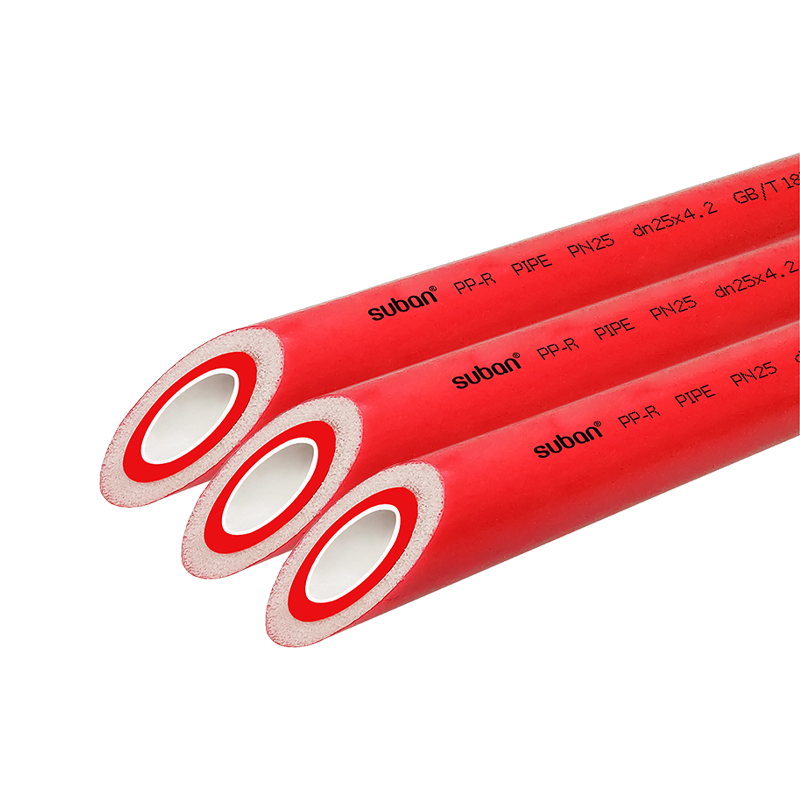
A dash in the table means the pipe is not recommended for continuous use at that temperature because the remaining pressure capacity drops below practical thresholds. For district heating networks or industrial hot water lines that run near 90°C, only PN20 and PN25 pipes are worth considering. Pairing them with a high-quality PPR pipe system designed for elevated temperatures is the only safe path.
How Temperature Impacts PPR Pipe Service Life
Temperature does not just affect pressure ratings — it eats away at the polymer chain one day at a time. The lifespan of a PPR pipe follows an Arrhenius-type relationship: for every 10°C increase in continuous operating temperature, the expected service life roughly halves. A pipe that would last 50 years at 70°C under 10 bar might survive only 25 years at 80°C under the same pressure, and less than 10 years if pushed to 90°C.
This is not a defect; it is the physics of any thermoplastic. The key is to understand the trade-off and design the system to match the real thermal load. Cold water lines at 20°C can comfortably exceed 100 years of service. Domestic hot water systems running at 55–60°C will almost always reach the 50-year design life if the correct pressure grade is selected. The problems start when specifiers treat the 95°C short-term limit as a continuous rating.
To make this concrete, here is a life-expectancy matrix for a PN20 pipe operating under clean water conditions.
| Continuous Temp. | 8 bar Pressure | 10 bar Pressure | 12 bar Pressure |
|---|---|---|---|
| 40°C | 50+ years | 50+ years | 50 years |
| 60°C | 50+ years | 50 years | 40 years |
| 70°C | 50 years | 40 years | 25 years |
| 80°C | 30 years | 20 years | 10 years |
| 95°C | 10 years | 5 years | Not recommended |
These figures assume proper installation and the absence of chemical attack. They are drawn from long-term hydrostatic strength testing (LTHS) curves validated by ISO 9080. At 95°C, even PN20 pipes lose more than 80% of their life expectancy compared to 70°C operation. That single statistic should shape every high-temperature design decision you make.
Installation Temperature: Why 5°C to 40°C Matters
Every installation crew knows the frustration of working with PPR pipe on a freezing morning. Below 5°C, the material’s impact strength drops measurably. A pipe that bends easily at 20°C can develop micro-fractures when cut or hammered into brackets at -5°C. Those hairline cracks may not leak during the pressure test, but they become initiation points for slow crack growth once the system is in service.
Conversely, above 40°C, the pipe surface softens enough to compromise the precision of fusion joints. Inserting a softened pipe end into a hot fitting can lead to ovality, uneven melt distribution, and reduced joint strength. The result is a higher probability of leakage at the very connections that should be the strongest points in the system.
The following risks and countermeasures should be standard practice on any PPR installation site.
- Below 5°C: Store pipes indoors overnight. Pre-warm pipe ends with a fan heater before cutting. Impact tests show a 25-30% drop in Charpy notched impact strength at -10°C compared to 20°C.
- Above 40°C: Schedule fusion work during cooler hours. Shield pipes from direct sunlight. Softening can reduce the torque required to deform the pipe by up to 40%, making it hard to maintain a consistent joint gap.
- Wind chill effect: Even at 8°C ambient, a strong wind can lower the pipe surface temperature below the brittle threshold. Use windbreaks and monitor surface temperature with an infrared thermometer.
Taking these precautions is not optional for any project that must meet warranty requirements. Many manufacturers explicitly exclude damage caused by installation outside the 5–40°C window.
PPR Heat Fusion Temperature: The 260°C Standard
Hot melt joining is the backbone of PPR system integrity, and the temperature at the fusion interface is non-negotiable. According to DVS 2207-11, the heater plate must maintain a surface temperature of 260°C, with a permitted tolerance of ±10°C. Stray outside that band and you either get a weak, under-melted joint or a burned, oxidized surface that cannot form a proper molecular bond.
When the fusion temperature drops below 250°C, the molten layer is too thin. The polymer chains do not inter-diffuse deeply enough, and the joint brittle-fractures under tensile stress. At temperatures above 280°C, thermal degradation begins. The surface oxidizes, turning yellowish, and the resulting joint can lose up to 40% of its tensile strength compared to a correctly fused sample.
The table below summarizes the critical differences in joint quality across the temperature spectrum.
| Heater Temp. | Melt Quality | Joint Strength | Visual Indicators |
|---|---|---|---|
| Below 250°C | Poor, shallow melt | 60-70% of rated | Dull bead, uneven surface |
| 260°C (±10°C) | Optimal, uniform melt | 100% of rated | Double, symmetric bead |
| Above 280°C | Degraded, oxidized | 55-80% of rated | Yellow/brown edge, thin bead |
For anyone specifying or supervising PPR installations, insisting on a temperature-calibrated fusion machine and documenting the heater surface temperature before each shift is a cheap insurance policy. The entire hot melt fitting assembly depends on it.
Comparing PPR Pipe Types: Standard vs. Composite vs. Fiberglass-Reinforced
Standard PPR pipes serve the core 70°C/10 bar application window, but many projects demand more. When temperatures push toward 85°C continuously, or when thermal expansion must be minimized, two upgraded categories enter the picture: PPR-AL-PPR composite pipes and fiberglass-reinforced PPR pipes. Each changes the temperature game in a different way.
PPR-AL-PPR composite pipes embed a thin aluminum layer between inner and outer PPR layers. That metal core acts as an oxygen barrier and slashes the linear thermal expansion coefficient from about 0.15 mm/m·K down to 0.03 mm/m·K. In a 30-meter riser carrying 80°C water, the difference is 4.5 mm of expansion versus only 0.9 mm — a massive reduction that spares the need for frequent expansion loops. The aluminum also boosts the continuous temperature ceiling by roughly 5–10°C compared to an equivalent standard PPR pipe.
Fiberglass-reinforced PPR pipes, on the other hand, mix short glass fibers into the middle layer. They trade some of the composite’s expansion advantage (coefficient around 0.05 mm/m·K) for higher stiffness and better creep resistance at elevated temperatures. They are particularly well-suited for high-temperature industrial lines and solar thermal systems where temperatures can hover around 90°C for hours.
The comparison table below clarifies where each type fits best.
| Pipe Type | Continuous Temp. Limit | Expansion Coefficient (mm/m·K) | Recommended Application |
|---|---|---|---|
| Standard PPR | 70°C | 0.15 | Cold water, domestic hot water up to 60°C |
| PPR-AL-PPR Composite | 85°C | 0.03 | High-rise hot water risers, radiator connections |
| Fiberglass-reinforced PPR | 90°C | 0.05 | Solar thermal, industrial hot water, district heating |
Selecting the right type is not about finding the highest-rated pipe — it is about matching a pipe’s thermal personality to the actual operating conditions. For most apartment buildings, a multi-layer PPR pipe that combines toughness with lower expansion is the pragmatic choice.
Extreme Conditions: How PPR Pipes Perform in Cold Climates (Antarctic Case Study)
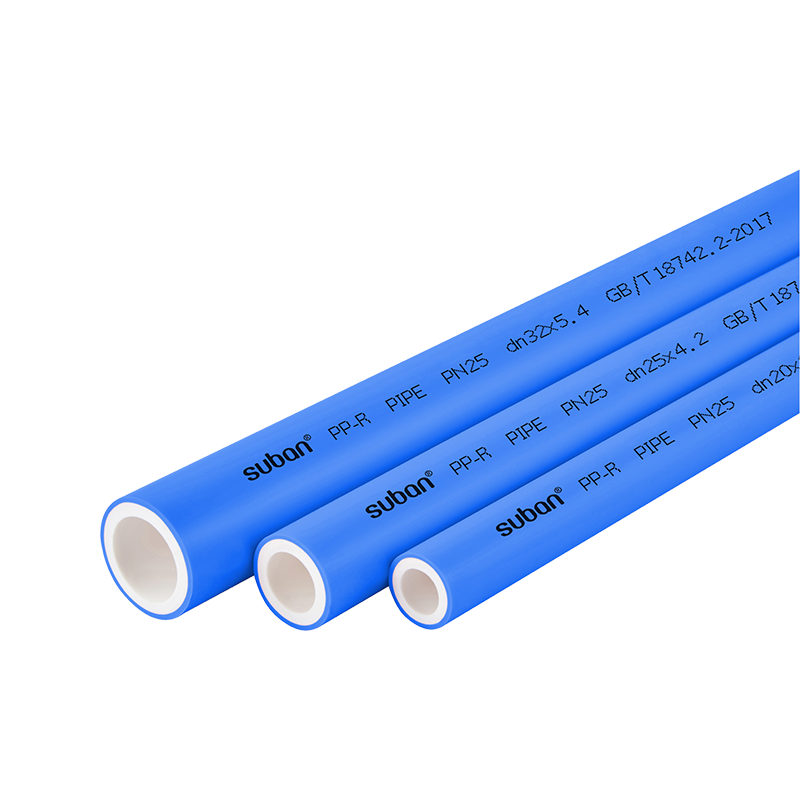
Most temperature discussions focus on the hot side, but the cold end can be just as punishing. Conventional wisdom says PPR becomes brittle below 5°C and should be handled with care. Yet real-world data tells a more resilient story. PPR pipe systems have been installed and operated successfully in Antarctic research stations where ambient temperatures drop to -40°C and soil frost penetrates several meters deep.
In one documented case, a PPR water supply network was laid inside a heated utilidor, with pipe surface temperatures stabilizing around 2–4°C even when outdoor air hit -38°C. The pipe material retained sufficient impact resistance for maintenance operations, and no cold-weather fracture occurred over a five-year monitoring period. This performance was possible because the pipe grade was specifically selected for low-temperature toughness — a standard PN20 pipe would have carried a higher risk.
What the Antarctic deployment confirms is that low-temperature failure is not an inherent property of PPR but a function of grade choice, installation method, and insulation design. In climates where freeze protection is critical, antifreeze PPR pipe formulations further reduce the brittle transition temperature, providing an extra safety margin.
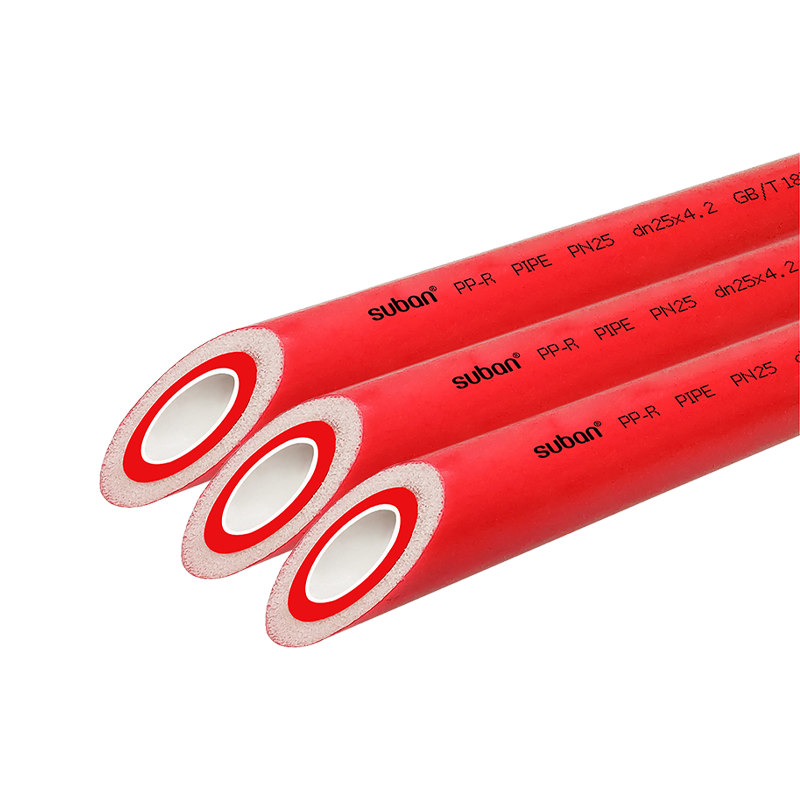
The takeaway is simple: if your project sits in a cold region, specify a pipe grade tested for low-temperature impact, keep the pipe insulated, and never install when the material temperature is below 5°C without pre-warming. The Antarctic stations prove it can be done reliably.
How to Select the Right PPR Pipe for Your Temperature Requirements
Choosing a PPR pipe strictly by its PN number is a recipe for either overspending or undersizing. The correct selection process runs in three steps: define your maximum operating temperature, set the system working pressure at that temperature, and then pick a pipe grade whose derated pressure capacity exceeds that value with a small safety buffer.
For example, a commercial building hot water loop running at 75°C and 8 bar demands more than a PN16 pipe can offer after derating (16 bar × 0.45 ≈ 7.2 bar). A PN20 pipe gives roughly 20 × 0.45 = 9 bar, which clears the threshold with a comfortable margin. If the same system were at 85°C, only a PN25 pipe would remain viable, and even then the margin shrinks to near design limits.
Beyond pressure and temperature, consider thermal expansion and chemical compatibility. The decision tree below maps common applications to the most suitable pipe type and pressure class.
| Application | Typical Temp. | Pressure | Recommended Pipe |
|---|---|---|---|
| Cold water distribution | Up to 20°C | 6–10 bar | PN10 / PN16 Standard PPR |
| Domestic hot water (DHW) | 55–60°C | 6–8 bar | PN20 Standard PPR |
| High-temperature DHW / solar | 70–85°C | 6–8 bar | PN20/PN25 Composite or Fiberglass |
| Radiator heating | 70–80°C | 4–6 bar | PN20 Composite |
| Industrial hot water | 80–95°C | 4–8 bar | PN25 Fiberglass-reinforced |
| Cold climate frost-exposed | -20°C to 20°C | 6–10 bar | PN16/PN20 Antifreeze PPR |
The final call always belongs to a qualified engineer who can account for site-specific factors such as water hammer, thermal cycling frequency, and external loads. However, using this table as a starting point eliminates the most common mismatches and brings the focus back to the temperature range your system will actually experience.
Our Product //
Recommend Products
 +86-13801995968
 +86-18017886575
 No. 366, Lane 6995, Puxing Road, Fengxian District, Shanghai
Copyright © SHANGHAI PILSA PIPE INDUSTRY CO., LTD. All rights reserved.

