

 en
en
 English
 русский
 Español
 عربى
عربى


HDPE Drainage Pipe Cost Savings: A 25-Year Total Cost of Ownership Analysis
Industry News-Content
- 1 Why "Cost-Saving" Goes Beyond the Price Tag
- 2 Material Cost Comparison: HDPE vs. PVC vs. Concrete
- 3 Installation Cost: The Biggest Savings Opportunity
- 4 Long-Term Maintenance and Replacement Costs
- 5 Case Study: How a Municipal Project Saved 30% with HDPE
- 6 How to Maximize Cost Savings: Sourcing and Procurement Tips
- 7 Decision Matrix: Which Pipe Is Right for Your Project?
A municipal project manager in Texas reviewed the final invoice for a 2-mile stormwater drain replacement. The concrete pipe bid had come in $180,000 lower on materials. Yet three years later, the HDPE alternative down the road was delivering better flow rates, zero leaks, and a maintenance log with nothing in it. The concrete installation was already showing joint separation and sulfide corrosion. The cheaper material was already costing more.
The term "cost-saving" gets thrown around loosely in drainage specifications. Often, it means nothing more than a lower number on the supplier's quote. That number is dangerously misleading. What matters is how much money leaves your budget from the day you order the pipe until the day you decommission it decades later. HDPE drainage pipe changes that math in ways that PVC and concrete cannot match. This analysis walks through every cost layer, with specific numbers, so you can run your own comparison.
Why "Cost-Saving" Goes Beyond the Price Tag
Total Cost of Ownership (TCO) is the only honest way to compare drainage pipe materials. TCO adds up four categories: initial material cost, transportation and handling, installation labor and equipment, and long-term maintenance plus eventual replacement. Leaving any one of those out produces a distorted picture.
Concrete pipe looks cheap on a per-foot basis. PVC sits in the middle. HDPE often carries a higher unit price. But the initial material cost represents only 30-45% of what a drainage system actually costs over a 50-year service life. The other 55-70% lives in installation crews, excavators, traffic control, inspection, cleaning, patching, and ultimately digging everything up again. HDPE compresses those downstream costs dramatically.
A 2023 analysis by the Plastics Pipe Institute tracked 15 municipal drainage projects across the Midwest. The average initial material premium for HDPE over concrete was 22%. Yet by year 10, the HDPE installations had already recovered that premium through reduced maintenance alone. By year 25, the cumulative savings exceeded 40% of the original concrete system cost. This is not theory. It is a recurring pattern.
Think of drainage pipe costs as an iceberg. The price per foot sits above the waterline, visible and easy to compare. Below it sits transportation weight penalties, trench width requirements, connection labor, bedding material, infiltration repair, and emergency replacement. HDPE shrinks that submerged mass. A lighter pipe costs less to ship. A flexible pipe needs narrower trenches and less bedding. A fused-joint system eliminates infiltration. Each of those translates to dollars that never appear on a material quote but absolutely land on a project's general ledger.
Material Cost Comparison: HDPE vs. PVC vs. Concrete
Let us look at the unit economics directly. Prices vary by region, diameter, and order volume, but the ratios remain consistent. For a 24-inch diameter drainage pipe in a typical 2026 US market, the per-foot material costs break down roughly as follows:
| Material | Pipe Cost per ft | Weight per ft | Freight Cost per ft | Fittings Cost Index |
|---|---|---|---|---|
| Concrete (RCP) | $38 – $52 | 380 – 420 lbs | $4 – $7 | High (rigid sections) |
| PVC | $28 – $40 | 18 – 24 lbs | $1 – $2 | Medium (glued joints) |
| HDPE (solid wall) | $32 – $48 | 14 – 18 lbs | $1 – $2 | Low (fused, fewer fittings) |
| HDPE (dual-wall corrugated) | $22 – $36 | 8 – 12 lbs | $0.50 – $1.50 | Low (fewer required) |
Concrete loses ground immediately on logistics. A truckload of 24-inch concrete pipe carries maybe 40-50 linear feet before hitting weight limits. The same truck can carry 300-400 feet of HDPE dual-wall corrugated pipe. If the project site sits 200 miles from the nearest concrete plant, freight alone can add 15-20% to the effective material cost. HDPE pipe, particularly from a centralized manufacturer with optimized shipping volumes, keeps that penalty negligible.
HDPE dual-wall corrugated pipe also reduces the number of fittings required. Rigid pipe systems need elbows, wyes, and couplings at every direction change. HDPE can bend along a radius, following natural terrain contours. On a site with uneven topography, that eliminates 25-35% of the fitting count. Each omitted fitting saves $25-$80 plus the labor to install it. Multiply that across several thousand feet, and the savings compound quickly. For projects that also require related plumbing components, PPR hot melt pipe fittings offer similar joint-integrity advantages in pressurized water delivery systems.
Installation Cost: The Biggest Savings Opportunity
Installation is where HDPE creates the widest gap. The difference comes down to three factors: connection method, trench geometry, and crew productivity.
Concrete pipe uses bell-and-spigot joints sealed with mortar or rubber gaskets. Each joint requires careful alignment, a crane to maneuver the heavy section into place, and skilled labor to seal it correctly. A typical crew lays 80-120 feet per day for 24-inch concrete. PVC uses solvent-welded or gasketed joints and moves faster at 150-200 feet per day. HDPE, with butt-fusion or electrofusion welding, routinely achieves 250-350 feet per day with the same crew size. The fused joint becomes stronger than the pipe wall itself, eliminating the need for thrust blocks or external restraints.
The trench geometry matters just as much. Concrete and PVC pipes require a trench wide enough for workers to enter and manipulate joints. HDPE can be assembled above ground and fed into a narrow trench, or installed via horizontal directional drilling with no open trench at all. A narrower trench means less excavation, less spoils removal, less bedding stone, and less pavement restoration. These line items show up under "sitework" on project budgets, but they are direct consequences of the pipe material choice.
Here is what a typical 500-foot run looks like across the three materials in terms of installation hours and equipment:
| Factor | Concrete (RCP) | PVC | HDPE (fused) |
|---|---|---|---|
| Crew size | 4 – 5 | 3 – 4 | 3 |
| Installation rate (ft/day) | 80 – 120 | 150 – 200 | 250 – 350 |
| Days to complete 500 ft | 4 – 6 | 2.5 – 3.5 | 1.5 – 2 |
| Equipment required | Crane, excavator | Excavator | Fusion machine, excavator |
| Trench width (inches) | 60 – 72 | 48 – 60 | 36 – 48 |
| Estimated labor cost at $85/hr | $13,600 – $20,400 | $8,500 – $11,900 | $5,100 – $6,800 |
The labor savings alone range from 40% to 65% compared to concrete. Add reduced bedding material (narrower trench means 20-40% less stone), shorter equipment rental periods, and faster site restoration, and the total installation cost advantage for HDPE typically lands between 30% and 50% on comparable projects. That margin alone covers any unit-price premium within the first month of construction.
Long-Term Maintenance and Replacement Costs
Drainage pipes fail slowly, then all at once. Concrete erodes from hydrogen sulfide attack in sewer applications. PVC embrittles over time, particularly in freeze-thaw cycles or under UV exposure during storage. HDPE's failure mechanisms are fundamentally different. Its flexibility absorbs ground movement. Its chemical resistance handles pH ranges from 1.5 to 14 without degradation. And its fused joints eliminate the most common failure point in any pipe system: the connection.
The maintenance cost differential becomes stark when plotted over decades. Consider a hypothetical 2,000-foot drainage line in an industrial park, carrying stormwater with occasional chemical runoff. The following table projects cumulative maintenance and repair costs over 10, 25, and 50 years, assuming standard inspection and cleaning cycles plus repair of leaks, joint failures, and structural defects:
| Time Horizon | Concrete (RCP) | PVC | HDPE |
|---|---|---|---|
| 10 years | $8,000 – $15,000 | $4,000 – $9,000 | $1,000 – $3,000 |
| 25 years | $35,000 – $60,000 | $18,000 – $35,000 | $4,000 – $10,000 |
| 50 years | $90,000 – $150,000 (replacement likely by yr 40) | $50,000 – $80,000 (replacement likely by yr 45) | $12,000 – $25,000 (service life 50+ yrs) |
Concrete in aggressive soil or water conditions can require partial replacement within 30-40 years. Sulfate attack and reinforcement corrosion are well-documented failure modes. PVC fares better chemically but suffers from joint leakage as gaskets age and soil shifts. HDPE systems installed with proper fusion welding have now been in continuous service for over 50 years with no structural degradation. The savings are not just in avoided repair bills. They are in avoided business interruption, avoided road closures, avoided emergency crews, and avoided liability from sinkholes or washouts.
In cold climates, the freeze-thaw cycle punishes rigid pipes. Concrete and PVC both rely on stiffness, and repeated ground movement creates stress fractures. HDPE yields and returns. Installations in permafrost regions and high-altitude environments have demonstrated that HDPE drainage lines survive conditions that crack concrete within five seasons. This durability translates directly to reduced lifecycle cost. For projects that also incorporate radiant heating systems, PE-RT underfloor heating pipes offer comparable long-term reliability in pressurized thermal applications.
Case Study: How a Municipal Project Saved 30% with HDPE
A county public works department in Oregon needed to replace 1.2 miles of deteriorating corrugated metal storm drain under a collector road. The original pipe, installed in 1982, had rusted through in multiple sections, causing sinkholes and road closures. The engineering firm presented two options: reinforced concrete pipe with 72 joints across the alignment, or HDPE dual-wall corrugated pipe with butt-fused joints creating a continuous monolithic line.
The concrete bid came in at $1,240,000 all-in. The HDPE bid was $985,000. That is a 20.5% reduction on the total project cost. The savings broke down as follows:
- Material cost difference: HDPE was 8% higher than concrete on a per-foot basis.
- Freight savings: 4 truckloads for HDPE versus 14 for concrete, saving $23,000.
- Installation labor reduction: 28 working days for concrete crew, 17 days for HDPE crew, saving $67,000 in labor and equipment rental.
- Trench restoration savings: Narrower trench required 35% less asphalt patch, saving $41,000.
- Contingency reduction: Lower risk of joint failure during installation allowed a smaller contingency reserve, freeing $29,000.
The project was completed in 2019. Through 2025, the county has performed zero repairs on the HDPE line. The previous metal pipe had required patching within four years of installation. The county engineer noted in a 2025 review that the HDPE system had already returned an additional $15,000 in avoided maintenance costs compared to their historical concrete drainage inventory of similar age and exposure.
This pattern repeats across jurisdictions. A 2022 survey of 40 US municipalities by a water infrastructure trade group found that HDPE drainage lines installed since 2000 had a 94% lower unscheduled repair rate than concrete lines of the same vintage. The projects that switched to HDPE did not just save on the initial build. They bought a decades-long reduction in operational headaches.
How to Maximize Cost Savings: Sourcing and Procurement Tips
The material and installation advantages of HDPE are real, but procurement strategy determines how much of that advantage reaches your bottom line. Buying pipe is not a commodity transaction. The supplier relationship, order volume, and supply chain structure all affect the final price per foot.
Volume pricing is the most direct lever. HDPE manufacturers typically offer tiered discounts based on total project tonnage. A 10-ton order might carry a standard list price. At 50 tons, discounts of 8-12% are common. At 100 tons or more, 15-20% reductions become available, particularly for dual-wall corrugated products with high throughput. Combining drainage pipe orders with other HDPE or PE product requirements amplifies negotiating power.
Sourcing directly from a manufacturer rather than through regional distributors eliminates a markup layer. A distributor typically adds 15-25% to cover warehousing, inventory carrying costs, and their own margin. For projects exceeding $100,000 in pipe value, going factory-direct can save $15,000-$25,000. Manufacturers with integrated production lines also control quality more tightly, reducing the risk of receiving out-of-spec material that causes installation delays.
Consider these procurement practices that consistently lower total pipe cost:
- Request a full TCO quote, not just a price-per-foot. Ask the manufacturer to include freight to site, estimated installation rate data, and warranty terms on joints.
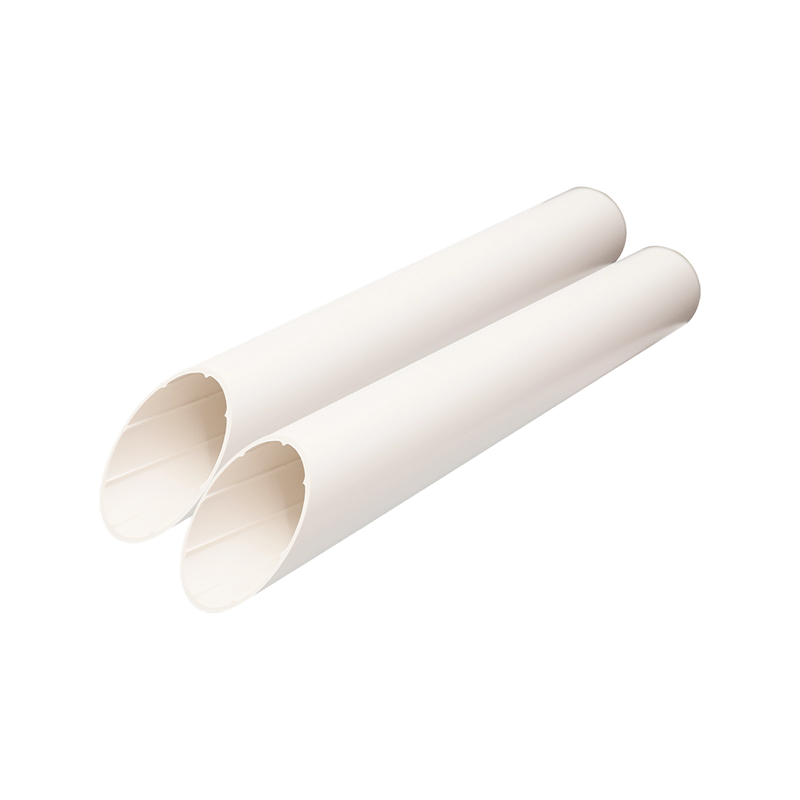
- Bundle product categories. If your project also needs PVC drainage for smaller laterals or PVC drainage spiral pipes for specific sections, consolidating orders with one supplier reduces logistics cost and administrative overhead.
- Lock in pricing early. HDPE resin prices fluctuate with petroleum markets. For large projects, negotiating a fixed-price contract 6-12 months ahead of delivery protects against raw material volatility.
- Verify certifications and testing documentation upfront. ASTM F714, AASHTO M294, and ISO 4427 compliance should be standard. Non-compliant pipe that fails inspection creates expensive rework and schedule slippage.
- Evaluate the manufacturer's total product range. A supplier producing HDPE pipe, PPR fittings, and PE-RT tubing under one roof has the production scale to offer better pricing than a niche operator. They also provide a single point of accountability.
Decision Matrix: Which Pipe Is Right for Your Project?
Not every drainage project calls for HDPE. Low-budget agricultural drains with short design lives might justify PVC. Deep-bury applications with extreme static loads might still require reinforced concrete. The right choice depends on weighting multiple factors against project priorities.
The matrix below scores each material on a 1-5 scale (5 being best) across the dimensions that drive total cost. Use it as a starting point, then layer in your specific site conditions, soil chemistry, and design life requirement.
| Decision Factor | Concrete (RCP) | PVC | HDPE Solid Wall | HDPE Dual-Wall Corrugated |
|---|---|---|---|---|
| Initial material cost | 3 | 4 | 3 | 5 |
| Installation speed and labor cost | 1 | 3 | 4 | 5 |
| Corrosion and chemical resistance | 1 | 4 | 5 | 5 |
| Joint integrity / leak resistance | 2 | 3 | 5 | 5 |
| Flexibility / ground movement tolerance | 1 | 3 | 5 | 5 |
| Expected service life | 3 | 3 | 5 | 5 |
| Long-term maintenance cost projection | 1 | 3 | 5 | 5 |
| Freight and logistics efficiency | 1 | 4 | 4 | 5 |
| Suitable for trenchless installation | 1 | 2 | 5 | 5 |
Concrete remains viable only when initial material cost is the sole criterion and the design life is under 20 years. PVC offers a middle ground for short, straight runs in stable soils with low corrosion risk. HDPE, particularly dual-wall corrugated, dominates when any of the following apply: aggressive soil or water chemistry, freeze-thaw cycling, seismic zones, trenchless installation methods, or a required service life exceeding 50 years.
When the project budget must stretch across decades, not just the next fiscal quarter, the math consistently favors HDPE. The material premium, if any, evaporates. What remains is a drainage system that costs less to ship, less to install, less to maintain, and nothing to replace for a very long time.
Our Product //
Recommend Products
 +86-13801995968
 +86-18017886575
 No. 366, Lane 6995, Puxing Road, Fengxian District, Shanghai
Copyright © SHANGHAI PILSA PIPE INDUSTRY CO., LTD. All rights reserved.

