

 en
en
 English
 русский
 Español
 عربى
عربى


PPR Pipe Sizes & Pressure Ratings: The Complete DN-to-Inch Conversion Chart
Industry News-Content
Why PPR Pipe Size Matters
A misjudged pipe diameter can quietly erode an entire plumbing system’s performance. Pressure drops, noisy flow, oversized pumps, and premature joint stress all trace back to one root cause—incorrect PPR pipe size selection. When the diameter is too small, water velocity spikes, causing turbulence, pressure loss, and rapid wear on fittings. Choose a size too large, and you waste material, increase thermal lag, and complicate concealed routing in walls or chases.
Proper sizing balances four critical parameters:
- Flow rate demand — The volume of water the system must deliver at peak use determines the minimum cross‑sectional area required.
- System pressure — Pipe wall thickness and diameter jointly govern the allowable working pressure for a given temperature.
- Temperature range — Hot water and heating circuits demand thicker walls to compensate for reduced material strength at elevated temperatures.
- Fitting compatibility — Every reducer, tee, and valve must match the outer diameter and heat‑fusion depth precisely; mismatches create leak paths.
For contractors and engineers, getting the size right from the start avoids expensive rework and safeguards long‑term system reliability.
Standard PPR Pipe Dimensions: DN vs. Inches
Few topics cause as much confusion as the relationship between metric outer diameters, DN nominal sizes, and inch trade designations. PPR pipes are specified by outer diameter (OD) in millimeters, yet the plumbing trade still references inch‑based names. A pipe with a 25 mm OD does not equal a 1‑inch pipe; it matches the ¾‑inch trade size and corresponds to DN20 nominal size. The table below clarifies the most commonly called‑up sizes.
| Outer Diameter (mm) | Trade Size (inch) | DN Nominal | Inner Diameter (mm) PN16 | Typical Application |
|---|---|---|---|---|
| 20 | ½ | 15 | 15.4 | Fixture branches, sink feeds |
| 25 | ¾ | 20 | 20.4 | Residential hot/cold risers |
| 32 | 1 | 25 | 26.2 | Main supply lines for apartments |
| 40 | 1¼ | 32 | 32.6 | Building mains, small commercial loops |
| 50 | 1½ | 40 | 40.8 | Moderate‑flow commercial risers |
| 63 | 2 | 50 | 52.0 | Hotel water distribution, heating headers |
| 75 | 2½ | 65 | 61.8 | Industrial chilled water, larger booster loops |
| 90 | 3 | 80 | 74.0 | Process water, district cooling laterals |
| 110 | 4 | 100 | 90.0 | High‑volume mains, central plant piping |
| 160 | 6 | 150 | 132.2 | Industrial trunk lines, fire ring mains |
Always verify whether a specification refers to OD or DN. European and Asian projects frequently use the outer diameter, while some legacy North American documents still reference DN or inch sizes. Misinterpreting a request for “DN25 pipe” as 25 mm OD will result in undersized piping and excessive pressure loss.
PPR Pipe Pressure Ratings (PN) and Wall Thickness
Every PPR pipe carries a PN rating that defines its maximum allowable pressure at 20 °C. As temperature rises, the material’s strength decreases, so a pipe rated PN20 at ambient temperature may only safely handle 10 bar at 70 °C. The wall thickness increases with the PN class, directly shrinking the inner diameter and affecting flow capacity. The table below gives the standard metric dimensions.
| OD (mm) | PN12.5 (bar ≈12.5) | PN16 (bar ≈16) | PN20 (bar ≈20) | PN25 (bar ≈25) |
|---|---|---|---|---|
| 20 | 2.0 | 2.3 | 2.8 | 3.4 |
| 25 | 2.3 | 2.8 | 3.5 | 4.2 |
| 32 | 3.0 | 3.6 | 4.4 | 5.4 |
| 40 | 3.7 | 4.5 | 5.5 | 6.7 |
| 50 | 4.6 | 5.6 | 6.9 | 8.4 |
| 63 | 5.8 | 7.1 | 8.7 | 10.5 |
| 75 | 6.9 | 8.4 | 10.1 | 12.5 |
| 90 | 8.2 | 10.0 | 12.3 | 15.0 |
| 110 | 10.0 | 12.1 | 15.1 | 18.3 |
| 160 | 14.6 | 17.8 | 21.6 | 26.6 |
For hot‑water circuits operating above 60 °C, PN20 is the minimum recommended class, and many engineers specify PN25 for commercial heating loops that run continuously at 80–90 °C. Cold‑water distribution in a temperate climate can safely use PN12.5 or PN16, but always confirm the local code’s derating factors.
International Standards Comparison: ISO, DIN, GB/T
Three standards dominate PPR pipe manufacturing, and their differences in dimensional tolerances and wall thickness definitions can affect cross‑border project compliance. Selecting a pipe certified to the wrong standard may lead to fitting incompatibility even if the nominal OD is identical.
| Parameter | ISO 15874 | DIN 16962 | GB/T 18742 |
|---|---|---|---|
| OD range (mm) | 12–160 | 16–160 | 16–160 |
| Wall thickness basis | SDR series | SDR / PN series | SDR series |
| OD tolerance (20–63 mm) | 0–0.3 mm | 0–0.3 mm | 0–0.3 mm |
| Hot‑water test condition | 95 °C, 1000 h | 95 °C, 1000 h | 95 °C, 1000 h |
| Pipe marking requirement | OD × wall thickness, material, pressure class, standard | DIN register number, dimension, PN class | National standard number, dimensional code |
| Common market | Global (ex‑Asia) | Europe | China, export projects citing GB |
As a National Quality Benchmark Enterprise, the manufacturer produces PPR pipes strictly compliant with ISO 15874 and GB/T 18742, and has eight years of export experience serving projects in Europe, the Middle East, and South America. This standard‑alignment eliminates the risk of mismatched tolerances when fittings from different systems are mixed.
How to Select the Right Size for Your Project
Size selection moves from guesswork to certainty when you layer the project type, peak flow, and environmental temperature onto a structured decision path. Use the following field‑tested guidelines as a starting point.
- Residential (single‑family, condominium): 20 mm for fixture drops and D25–32 mm for main hot/cold risers. PN16 for cold water, PN20 for hot water. In regions with hard water, stepping up one size reduces flow noise and scaling velocity.
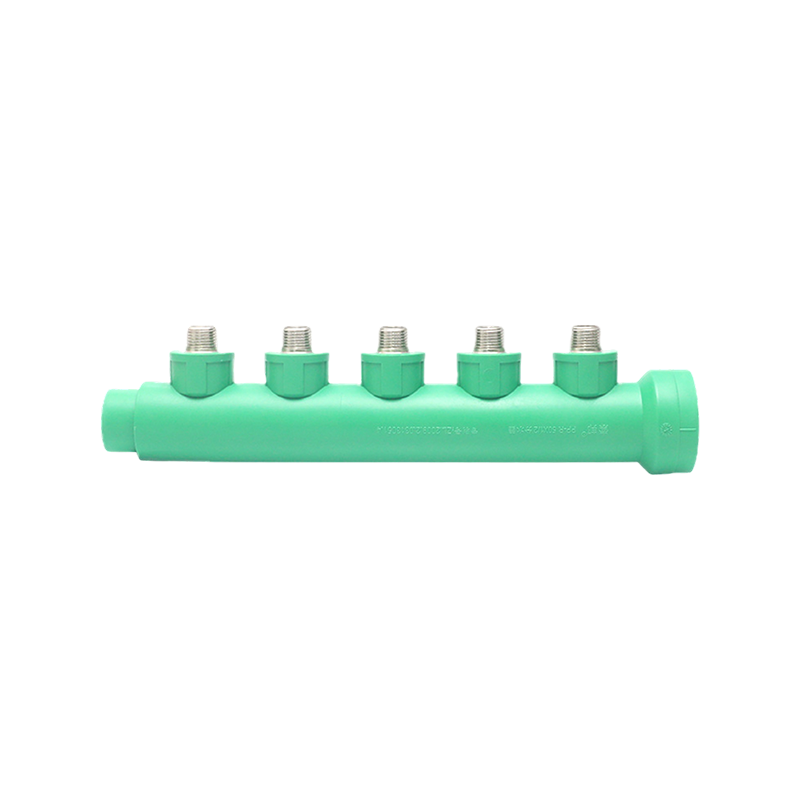
- Commercial (hotels, office towers, hospitals): 40–63 mm for distribution mains; 75–90 mm for incoming supply headers. Always specify PN20 or higher for hot‑water recirculation loops to handle sustained pressure at 70 °C. Manifolds with PPR high‑flow manifolds simplify zoning and maintenance.
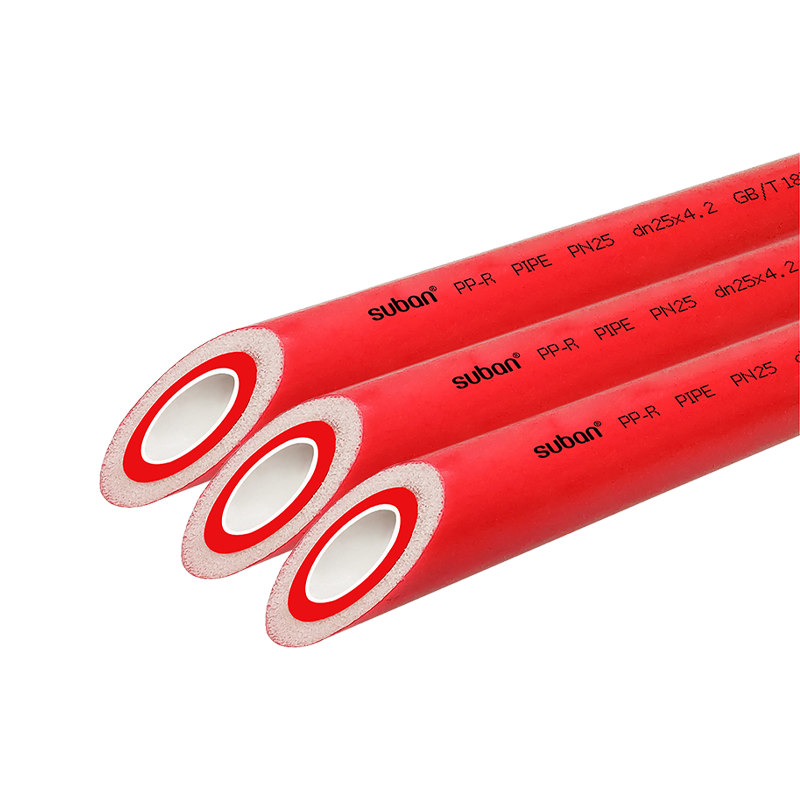
- Industrial (process cooling, district heating, fire rings): 75–160 mm pipes handle large volumes; PN25 is common where operating pressures exceed 16 bar or temperatures stay above 80 °C continuously. Use multi‑layer or fiber‑composite PPR to control thermal expansion on long straight runs.
In extreme cold climates, such as the Antarctic research base where the manufacturer serves as an official partner, a specially formulated PPR antifreeze pipe maintains dimensional integrity and low‑temperature impact resistance down to -20 °C. That same material science benefits mountain resorts and northern infrastructure.
PPR Pipe Size & Fitting Compatibility
A perfectly sized pipe can still fail if the fitting socket depth or the thermal fusion insertion length is off by even a millimeter. PPR socket fittings rely on a controlled interference fit during fusion; the pipe OD and the fitting’s socket diameter must comply with the same standard series. The table below lists common fitting types with reference fusion depths.
| Pipe OD (mm) | Fitting Type | Socket Depth (mm) | Heating Time (sec) | Cooling Time (sec) |
|---|---|---|---|---|
| 20 | Hot‑melt PPR tee, elbow | 14 | 5 | 10 |
| 25 | Tee, elbow | 16 | 7 | 12 |
| 32 | Tee, elbow, union | 18 | 8 | 14 |
| 40 | Tee, elbow, union | 20 | 12 | 20 |
| 50 | Tee, elbow, union | 23 | 18 | 25 |
| 63 | Tee, elbow, union | 27 | 24 | 35 |
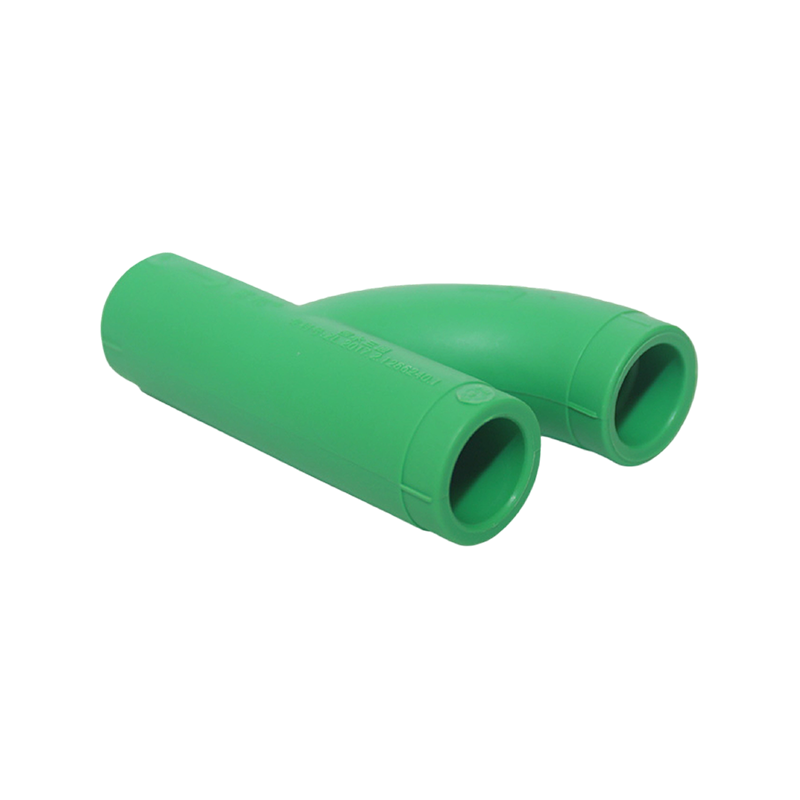
Always verify that both pipe and fitting belong to the same dimensional standard family. The manufacturer’s in‑house production of PPR hot‑melt pipe fittings and pipes ensures consistent OD‑to‑socket tolerances, eliminating the guesswork that can plague mixed‑vendor systems.
Common Mistakes in PPR Pipe Sizing
Even experienced crews can fall into sizing traps that silently degrade system performance. Recognizing these patterns early saves thousands in call‑backs.
- Assuming inch and metric sizes are interchangeable — Ordering “1‑inch PPR” and receiving 25 mm OD pipe (actually ¾‑inch trade) often leads to a 20 % flow deficit. Always cross‑reference OD and nominal designations.
- Ignoring temperature derating — A PN16 pipe that works for cold water at 20 °C may only handle 8 bar at 70 °C. Without selecting a higher PN class, the system risks bursting.
- Using the same size for all branches — Bathroom groups, kitchen sinks, and laundry feeds have different peak demands; homogenous sizing wastes material and creates pressure imbalances.
- Overlooking thermal expansion — Long runs of large‑diameter PPR can expand by several centimeters; skipping the required expansion loops or choosing an undersized pipe to “save space” causes bowing and joint stress.
- Mixing standards between pipe and fittings — ISO‑compliant pipe inserted into a GB‑compliant socket with a slightly different depth can result in incomplete fusion, even if the OD matches.
A simple pre‑installation checklist—project type, peak flow, pressure rating, environment temperature, fitting standard—prevents these errors from reaching the jobsite.
Our Product //
Recommend Products
 +86-13801995968
 +86-18017886575
 No. 366, Lane 6995, Puxing Road, Fengxian District, Shanghai
Copyright © SHANGHAI PILSA PIPE INDUSTRY CO., LTD. All rights reserved.

