

 en
 English
 русский
 Español
 عربى



HDPE Pipe Connection Methods: Butt Fusion, Electrofusion and Transitions
Industry News-Content
HDPE has earned its place in buried water mains, sewer force mains and industrial process lines because it is tough, flexible and chemically resistant. Every one of those advantages, however, depends on the joints. A well-made fusion joint becomes stronger than the pipe wall itself; a rushed one becomes the first leak you hear about after backfill. What follows is a field-oriented look at HDPE pipe connection methods, the details that decide whether a joint holds, and what to do when HDPE has to meet PPR, PVC or metal. The notes draw on our own manufacturing and project experience at Suban, where we have been producing pipe and fittings since 2003.
Read the Pipe Before You Choose a Method
Three numbers decide almost everything about a connection: outside diameter, DR (dimension ratio) and polyethylene grade. DR is the outside diameter divided by the wall thickness, so a lower DR means a thicker wall and a higher pressure class. In PE100, DR 11 lands around PN 16, DR 17 around PN 10 and DR 26 near PN 6 for water service. Wall thickness also sets your heating and cooling times - a 250 mm DR 17 pipe needs far more soak and cooling time than a 63 mm DR 11 coil from the same store.
Match the method to the dimension and to the site. Butt fusion covers most diameters from roughly 63 mm upward, socket fusion handles small bore work up to 63 mm, electrofusion suits tight trenches and tie-ins, and mechanical fittings serve service lines and equipment connections. Never down-rate a joint silently: if a compression fitting is going onto a PN 16 line, the fitting itself has to be rated for it.
The Four Core HDPE Pipe Connection Methods
Butt fusion
The workhorse method. Two pipe ends are faced square, heated on a heating tool at roughly 200 to 220 degrees Celsius, then pushed together and held until a double bead forms and cools. Done correctly, the joint is homogeneous - no gasket, no liner, no third material to fail. It needs a proper fusion machine, clean conditions and a crew that respects the cooling time.
Electrofusion
An electrofusion fitting carries a resistance coil inside its socket. A fusion box applies a defined voltage and time, melting the fitting bore and the pipe surface into one body. It is the go-to choice where a fusion machine cannot fit, for repair sleeves, and for tying into existing lines. Surface preparation matters more here than anywhere else: scrape, clean and mark before you energise.
Socket fusion
For small diameters, a hand-held heating tool with male and female sleeves heats the pipe end and the fitting socket at the same time. It is fast, inexpensive and reliable up to about 63 mm, which makes it common on service lines, irrigation and small bore distribution.
Mechanical and compression fittings
Compression fittings rely on an insert stiffener and an elastomer seal, while flanged adapters bolt HDPE to pumps, valves and other materials. They are quick and demountable, but they introduce a different material into the line and generally carry a lower rating than the pipe. Use them where their rating, not their convenience, allows.
| Method | Typical diameter | Pressure capability | Best used for |
|---|---|---|---|
| Butt fusion | 63 mm and above | Full pipe rating | Mains, force mains, long runs |
| Electrofusion | 20 to 800 mm | Full rating of the fitting | Tight trenches, repairs, tie-ins |
| Socket fusion | 20 to 63 mm | Full rating of the fitting | Small bore water and irrigation |
| Compression | 20 to 63 mm | Usually below pipe rating | Service lines, meters, temporary work |
| Flanged adapter | Any, with the right spigot | Depends on gasket and bolting | Pump rooms, valves, equipment |
A Practical Butt Fusion Sequence
The difference between a fifty-year joint and a callback usually comes down to a handful of habits. A working sequence looks like this:
- Clamp both ends, check alignment, and clean the pipe free of soil, oil and water.
- Face both ends until the chips are continuous and the faces are square.
- Bring the ends together and check gap and offset; a visible mismatch means re-clamping before heating.
- Heat at the temperature specified for the grade and wall thickness, and wait for the bead to reach the required size.
- Pull the heater out and close the ends within the open time stated by the machine maker - hesitate and the surface oxidises.
- Build the joint bead at the specified pressure, then leave it alone.
- Cool under pressure - as a rule of thumb, at least one minute per millimetre of wall thickness, longer in cold weather.
- Inspect the bead: even, rolled over on both sides, free of voids and without a visible joint line.
Where HDPE Connections Usually Go Wrong
- Dirt, moisture or a film of oil on the heated surface, which is the most common cause of a brittle cold joint.
- Heater temperature outside the window, or a heater plate that was not cleaned between joints.
- Mismatched DR or wall thickness between two pipes being joined.
- Cooling cut short because the trench crew is waiting.
- Compression nuts overtightened, splitting the liner, or the insert stiffener left out entirely.
- No allowance for thermal movement, so a buried line pulls on a mechanical joint as it cools.
Joining HDPE to PPR, PVC and Metal
Transitions are where most leaks appear, simply because two materials with different stiffness, expansion and temperature limits meet in one place. The three dependable options are a flanged adapter (the most robust and the most serviceable), a threaded transition fitting with a metal or reinforced plastic thread, and a compression adapter for smaller service lines. Whichever you choose, support the pipe on both sides of the transition so the joint never carries bending load.
HDPE to PPR on water supply
A common layout brings an HDPE service main into a building and switches to PPR for the indoor risers and distribution, because PPR handles hot water and hot-melt joints are easy to make inside a plant room. The changeover needs a purpose-made PE-to-PPR adapter rather than a handful of mismatched threads.
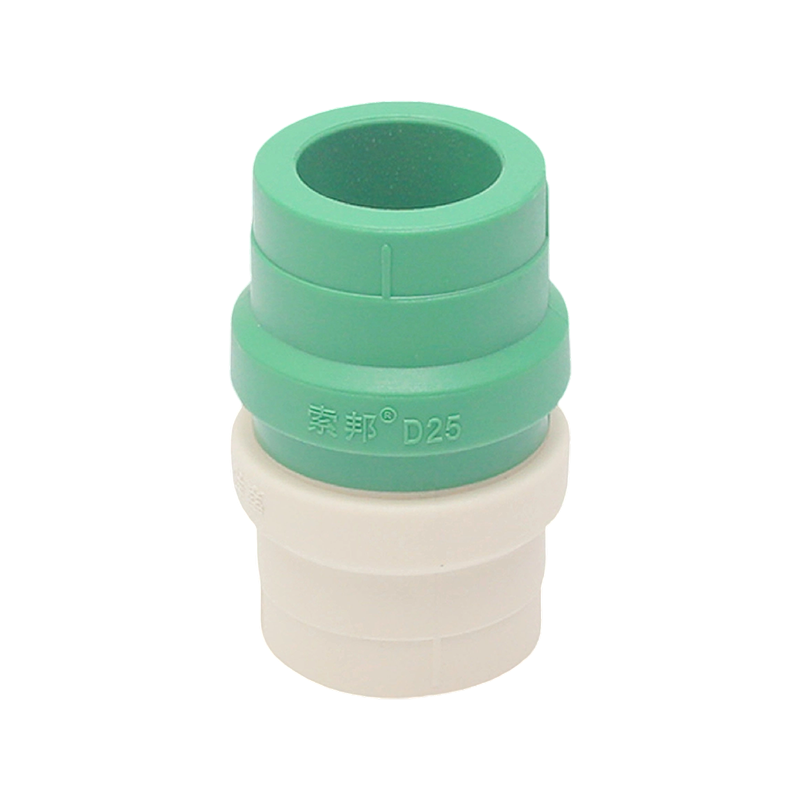 PPR-PE D25 Pipe Adapter for PE-to-PPR TransitionsA D25 hot-melt PPR fitting for purpose-made PE-to-PPR changeovers, sized to match PE service lines and PPR risers.View Product →
Size the adapter to match both the PE service line and the PPR riser, and keep the transition accessible wherever the specification allows.
HDPE to PVC on drainage
Below ground, HDPE soil and sewer lines often meet a PVC stack or inspection chamber at the building line. A flexible connector in that position absorbs small angular differences and thermal movement, and saves the site team from trying to persuade two rigid pipes into alignment with solvent cement.
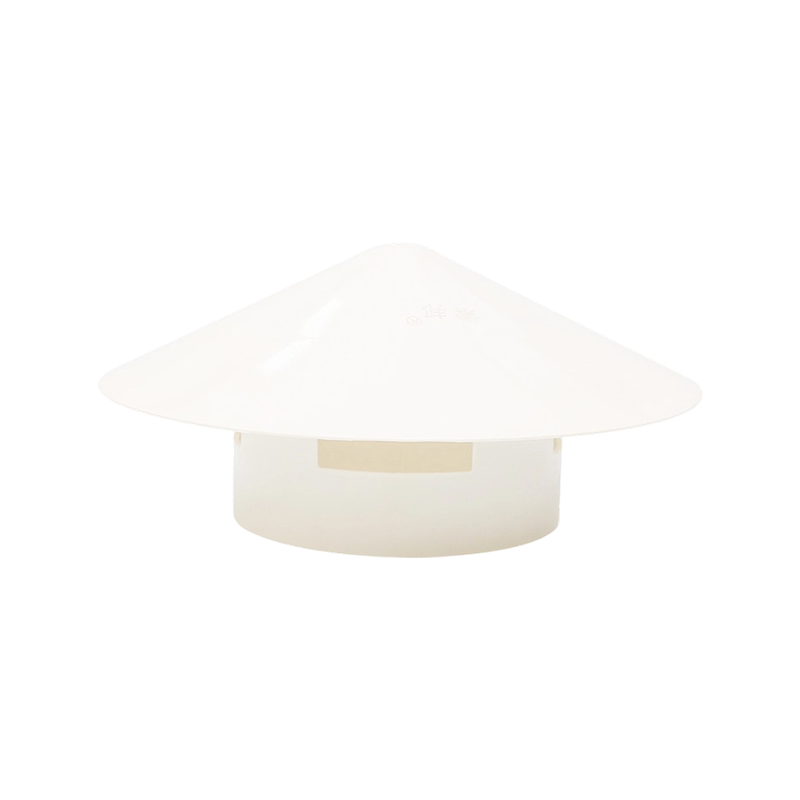 PVC Rotatable Flexible Straight-Elbow Connector for Drainage ConnectionsA rotatable PVC drainage connector available in D75, D110 and D160, suited to flexible alignment where HDPE soil lines meet PVC stacks.View Product →
Where the transition is buried, protect the metal components and confirm that the connector rating matches the drainage duty.
HDPE to metal
Brass or bronze transition fittings are the usual answer at pumps, meters and tanks. Use a proper thread sealant, isolate dissimilar metals where the specification calls for it, and tighten flanges in a cross pattern to the stated torque rather than to "tight enough".
Buried Lines, Movement and Testing
HDPE moves. Its coefficient of thermal expansion is several times that of steel, so a line installed in the cool of the morning will try to shorten by the afternoon. Lay long runs with a gentle snake, allow movement at mechanical joints, and restrain flanged connections at pumps and valves, where the thrust has somewhere to go.
Trench preparation matters as much as the joint itself. Bed the pipe on fine material free of sharp stones, keep cover depth consistent with the design, and compact side fill before the main backfill. Our HDPE drainage pipe installation guide covers bedding, cover depth and frost considerations in more detail.
Pressure test before backfill wherever the specification allows it, typically at 1.5 times the design pressure with a recorded hold time, and log the position of every joint. When something does need attention later, a joint register turns a day of digging into an hour of excavation.
Working With a Supplier Who Sees the Whole Line
Suban, operated by Shanghai Pilsa Pipe Industry Co., Ltd., has been manufacturing pipe and fittings since 2003, with production bases in Shanghai and Zhoukou, Henan. Our range covers PPR water supply systems, PVC drainage and electrical conduit systems, and PE-RT underfloor heating, alongside HDPE drainage pipe and double-wall corrugated pipe. Export experience across more than 20 countries and CE certification support the documentation side of international projects.
If you are assembling a line list that mixes HDPE mains with PPR risers or PVC drainage, send our team the details and we will confirm the fittings, sizes and ratings that match. Sorting that out at the quotation stage is almost always quicker than sorting it out on site.
Our Product //
Recommend Products
 +86-13801995968
 +86-18017886575

 No. 366, Lane 6995, Puxing Road, Fengxian District, Shanghai
Copyright © SHANGHAI PILSA PIPE INDUSTRY CO., LTD. All rights reserved.

